In modern architecture, we are witnessing a return to the essentials. While synthetic composite materials often cause problems, nature offers solutions that have proven themselves over thousands of years. Anyone building with natural building materials today, or renovating an older building, is relying on materials that actively work for the indoor climate: clay and travertine.
This combination is far more than an aesthetic choice. It is a technical solution to the challenges of modern construction: moisture regulation, heat storage and reducing the risk of mould.
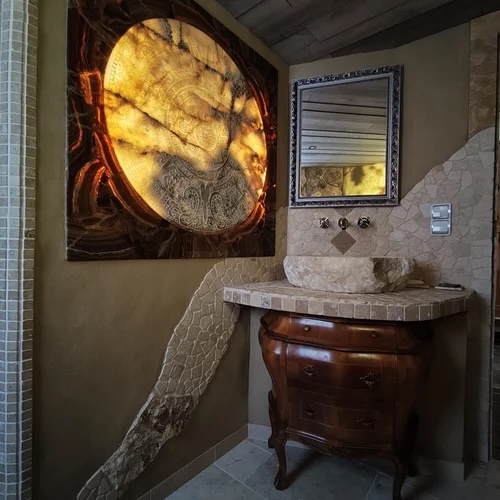
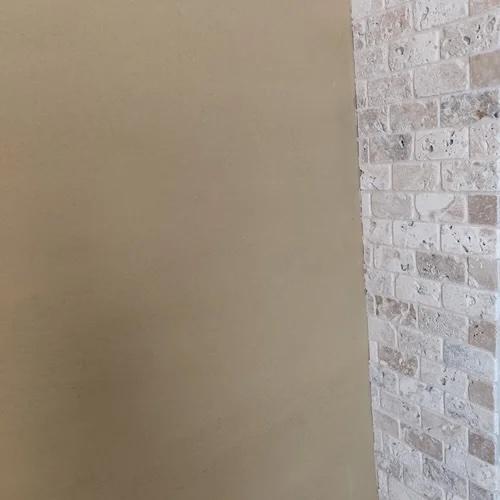
A symbiosis of light and nature: when backlit travertine meets vapour-permeable clay plaster.
The physics of freedom: when walls and floors communicate
The greatest enemy of any building is trapped moisture. In conventional homes, it often condenses on cold walls, creating the ideal breeding ground for mould. Clay and travertine solve this problem through purely physical processes.
Clay as a moisture manager: Professionally applied Clay building materials act as the lungs of the house. They absorb excess humidity within seconds and only release it again when the indoor air becomes too dry.
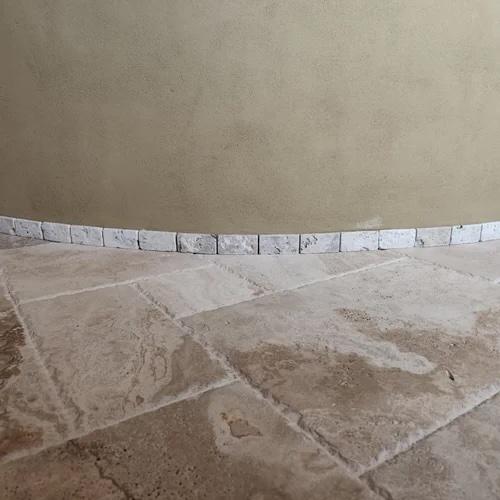
Travertine as a mineral anchor: A breathable system on the wall needs to be carried through consistently on the floor. Open-pored Travertine tiles remain part of this capillary system instead of acting like a vapour barrier.
In accordance with the principles of the Capillarity moisture moves through these materials instead of stagnating in the building component. The result is a stable, balanced indoor climate that protects the building fabric in the long term.
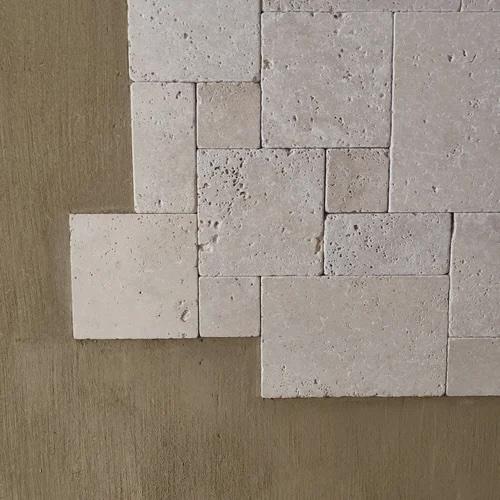
Thermal synergy: natural climate control
A solid natural stone floor has a high thermal mass. Combined with underfloor or surface heating, the stone becomes an efficient radiant body that releases heat evenly and over a long period.
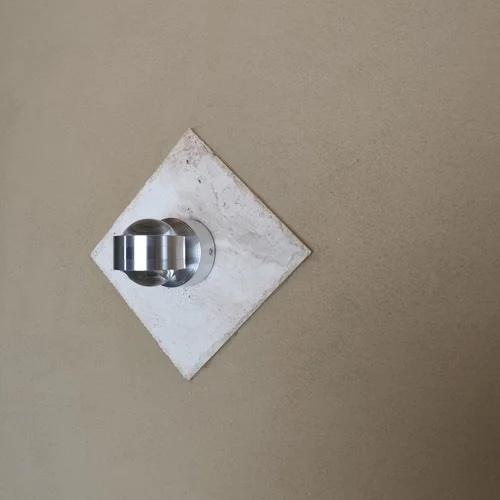
The real magic, however, happens in combination with the walls: while the stone retains the warmth from below, the heavy mass of a clay wall acts as a thermal battery. It stores energy (for example from solar radiation) and releases it with a time delay. In summer, the evaporative cooling of the moisture stored in the clay provides passive cooling – entirely without mechanical air conditioning.
Timeless aesthetics and lasting value
A light Travertin Classic forms the perfect visual stage for the matt, earthy surfaces of clay plasters. These materials don't pretend to be anything they are not; they age with dignity and, over the decades, develop a patina that enhances the character and value of a property. Natural stone and clay are timeless and outlast any short-lived design trend.
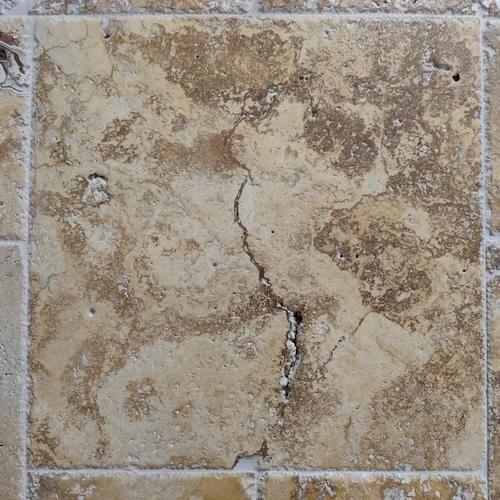
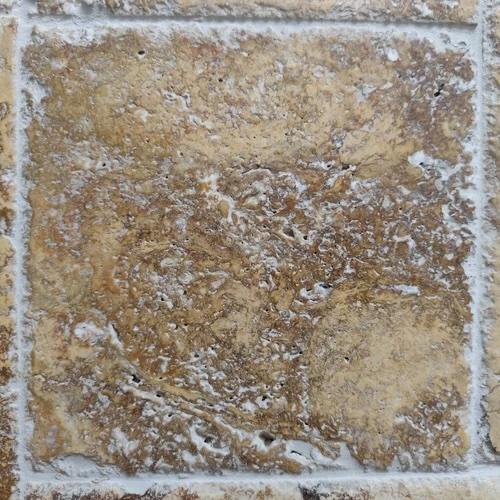
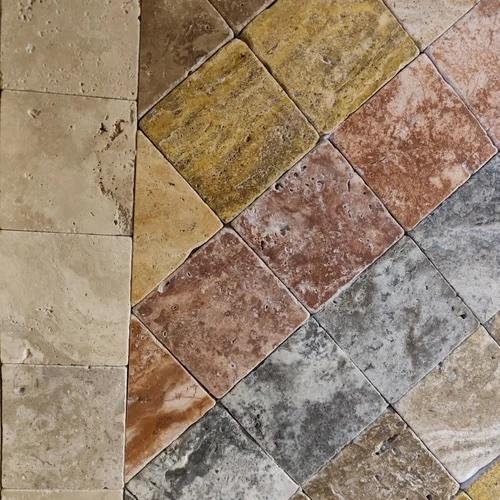
Nature's diversity: from lively Scabas textures to calm Classic shades, travertine offers the perfect counterpart for every clay tone
The ultimate challenge: the vapour-permeable floor build-up
In the renovation of old buildings in particular, the choice of the entire floor build-up is crucial to the success of the project. If vapour-tight layers are placed incorrectly, you risk moisture damage that can even spread into the new clay walls.
A vapour-permeable floor build-up in older buildings ensures that the entire system – from the substrate to the top edge of the natural stone – remains in building-physics equilibrium. It is the foundation for living without structural damage.
Sharing knowledge: E-E-A-T in practice
Building with natural building materials requires sound expertise to avoid wrong decisions when choosing materials. As the correct selection and application of natural materials can be complex, access to independent expertise is crucial.
Deeper insights are provided in the specialist book “Das Travertin Buch”, which the author, Frank Petry, offers interested self-builders and professionals provides free of charge online. In doing so, he aims to make the advantages and technical characteristics of these building materials accessible to everyone and to build a bridge between traditional craftsmanship and modern application
Conclusion
Combining clay and travertine is a deliberate choice for the future. It unites modern living comfort with the wisdom of traditional building materials, creating a home that not only looks good but actively enhances quality of life. Those who rely on these mineral classics build to last and create lasting value for generations.