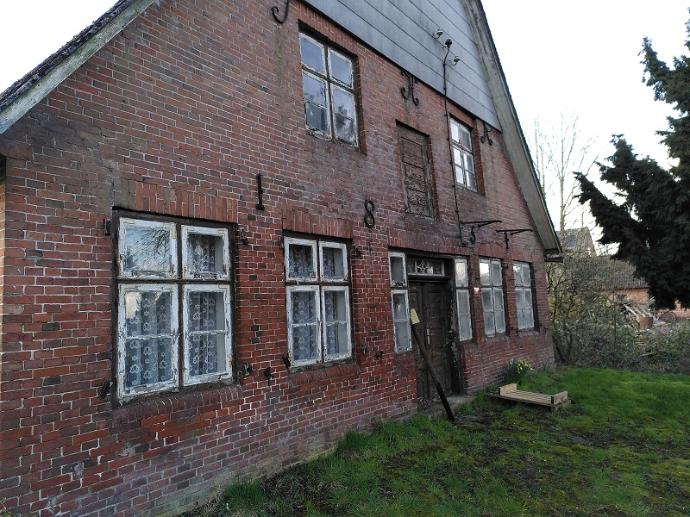
Historic building materials
weathered stones, beams with history, doors and floors bearing the marks of use and the love of their previous owners.

Preservation of historic building fabric
the reuse of second-hand building materials has many advantages. In the renovation of existing buildings, old and reclaimed building materials are often a much better fit than modern or new building materials. The history of the centuries can be read from the marks on the stones, and they blend well into the "new" old building.
The reuse of building materials has a long history. Timber-frame beams have always been used more than once, and today you can still find traces that simply do not fit their current use. Something like this usually indicates that the component has been used twice.
Circular construction
The construction industry is a major source of CO2. Decarbonising the
construction sector requires more than new and modern
building materials: reusing building materials also
saves a great deal of CO2. In keeping with a circular construction industry,
we work with regional partners and distribute C2C-capable building materials.
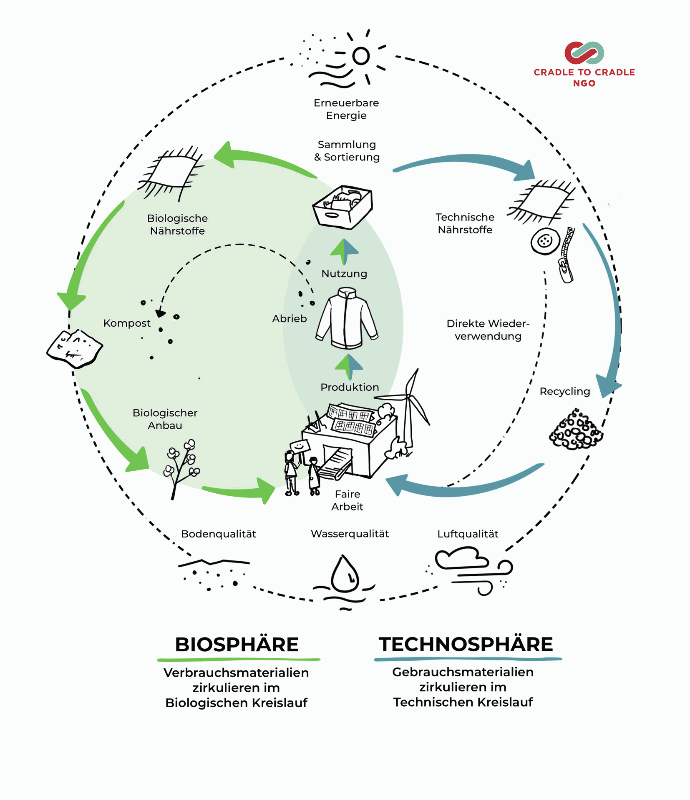
C2C
stands for Cradle to Cradle. The term Cradle to Cradle
refers to a cycle that works without generating waste.
These cycles
are either a direct biological cycle or a technical
cycle. In the biological cycle, the building materials can simply be returned to the environment without
causing environmental damage. This is the case, for example, with
clay, lime, hemp or wood.
In the technical cycle,
the processed material can be reused as exactly the same material (or as a new product made from this raw material, without waste).
The lower the recycling effort and the higher the degree of
reuse, the better the circularity of the
building material.