Shipping Special Extended!!! Only €199 for shipping on orders of €2,500 or more (net) with the promo code “FRACHT199”
Applies exclusively to online store orders
Tamped clay for solid clay walls and decorative surfaces
Rammed earth brings clay to life: as a solid wall, thermal mass or a distinctive surface featuring natural layers of earth. Well suited for interiors built with natural materials, high-quality architecture and building elements that store heat, can buffer humidity fluctuations and make a design statement.
|
|
|
|
|
|
|
|
Rammed earth: solid walls with a natural look
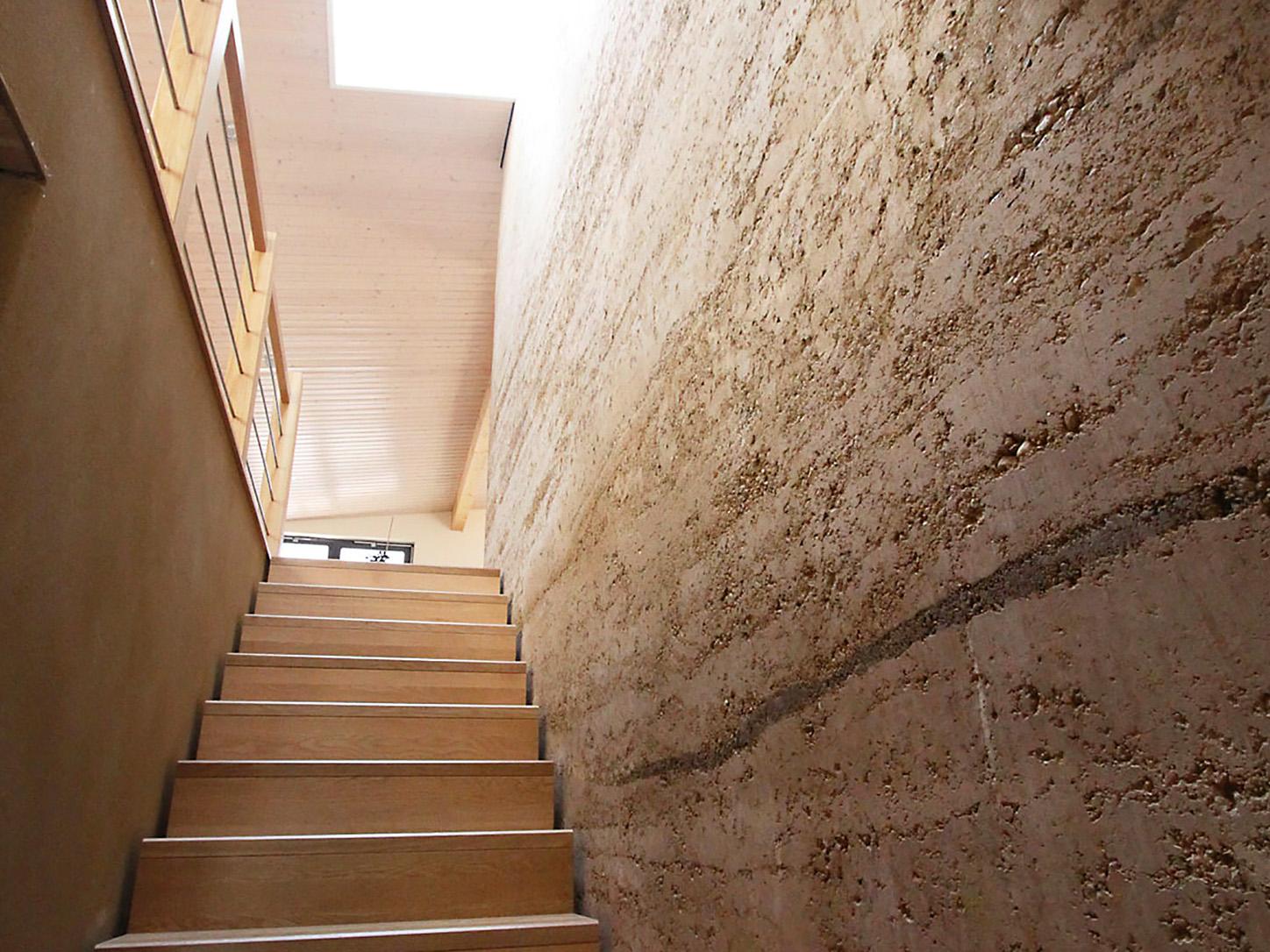
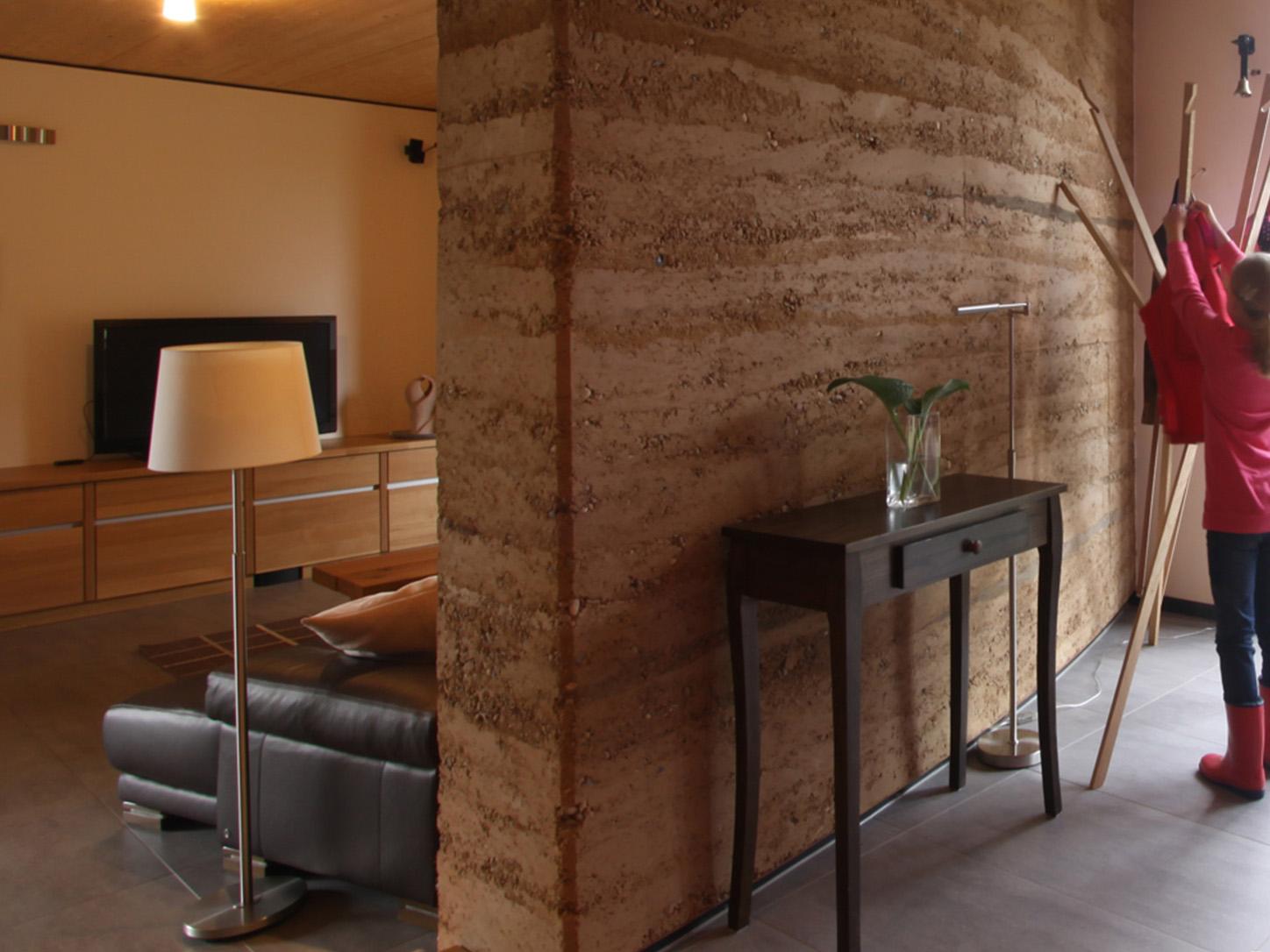
Rammed earth is clay in its most primitive and, at the same time, most striking form. The earth-moist material is laid in layers within a formwork and compacted. This produces solid clay structural elements with visible layers, high thermal mass and a unique natural surface.
Typical applications:
- solid rammed earth walls indoors
- Non-load-bearing clay walls and design features
- Facing shells and thermal mass in interior design with natural building materials
- Wall surfaces with visible layering and an earthy character
- Tamped earth floors and special design surfaces, depending on the system
Advantages of rammed earth
Rammed earth combines excellent structural properties with a surface finish that no other material can replicate.
- high thermal mass for heat storage, temperature regulation and comfort
- Vapour-permeable and moisture-regulating when used in the appropriate wall construction
- a unique surface with natural layers and an earthy texture
- Sound-insulating due to its mass and the soft stiffness of the material
- recyclable, as the clay is used unfired
What is rammed earth particularly suitable for?
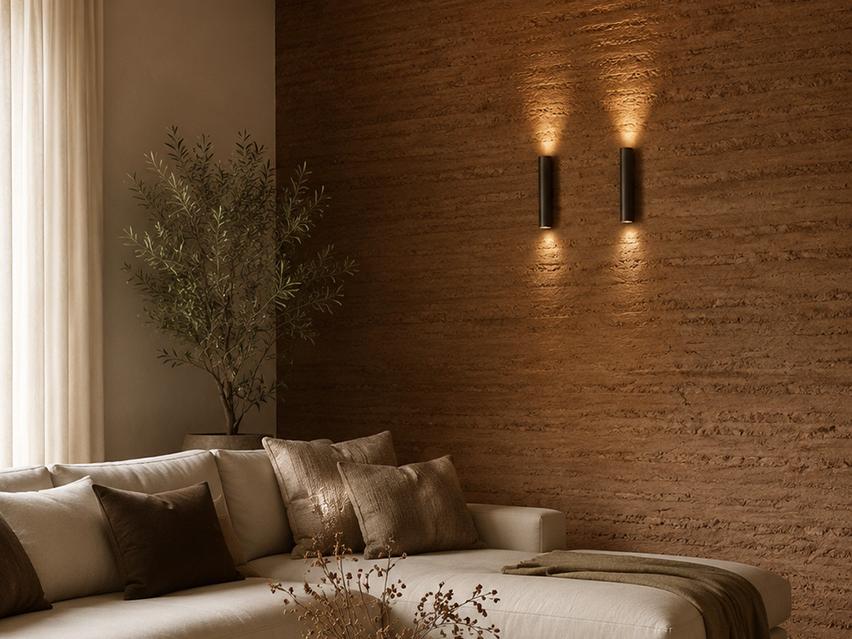
Rammed earth is ideal when clay is to be used not just as plaster or panels, but as a visible, solid structural element. The surface has an architectural, warm and handcrafted appearance – particularly when combined with wood, lime, natural stone or mineral-based floor coverings.
Depending on the construction method, rammed earth can be used for walls, cladding, thermal storage elements or decorative surfaces. For load-bearing structures, planning, structural analysis and professional execution are crucial; non-load-bearing components are also carefully formworked, laid in layers and compacted.
Processing and drying
Rammed earth is worked with a precisely controlled moisture content. If the material is too wet, it cannot be compacted properly; if it is too dry, it does not bind sufficiently. The consistency is therefore checked before installation and adjusted if necessary.
The material is placed in layers into the formwork and compacted using a compactor or hand tamper. Once the formwork has been removed, the component dries out slowly. Good planning, sufficient drying time and protection against excessive drying, frost or moisture are essential.
Frequently asked questions about rammed earth
What is rammed earth?
Rammed earth is a solid building material made from clay, sand, gravel and water. The earth-moist material is placed in layers within formwork and compacted mechanically. This produces robust, monolithic structural elements with a natural appearance, high thermal mass and excellent moisture regulation within the interior.
How do you make rammed earth?
Rammed earth is poured in layers, whilst still earth-moist, into sturdy formwork and compacted. Each layer is rammed until a firm, compact structure is achieved. Once the formwork is removed, the structural element dries out slowly. The key factors are the correct mix, the right moisture content, careful compaction and sufficient drying time.
How much does rammed earth cost?
The cost of rammed earth depends heavily on the size of the structural element, the formwork, the material, the compaction, the surface quality and the amount of craftsmanship involved. Rammed earth is usually more expensive than simple wall constructions because its production and installation are very labour-intensive. In return, it produces a durable, natural and architecturally high-quality finish.
What are the disadvantages of rammed earth?
Rammed earth requires experience, time and careful planning. It is more labour-intensive to work with than many modern building materials, takes longer to dry and must be protected from constant damp. In return, rammed earth offers an exceptional appearance, high thermal mass and a very natural feel to a room.
Is rammed earth load-bearing?
Rammed earth can be used as a load-bearing material provided that the structural analysis, material quality, wall thickness and construction method are planned accordingly. Not every rammed earth structure is automatically load-bearing. Load-bearing elements require professional structural analysis and expert planning. In interior design, rammed earth is also frequently used in a non-load-bearing capacity as a solid design element or thermal mass.
Is rammed earth as strong as concrete?
Rammed earth is not as compressive-resistant as concrete, nor does it fulfil the same technical function. Concrete is primarily used for reinforced structures that must withstand high loads. Rammed earth, on the other hand, offers advantages in terms of mass, moisture regulation, heat storage, natural materiality and a distinctive surface texture. They are therefore different building materials designed to meet different requirements.
How long does rammed earth take to dry?
The drying time depends on the wall thickness, indoor climate, air exchange rate and the moisture content of the material. Solid rammed earth elements dry considerably more slowly than thin layers of render. Depending on the construction, drying can take several weeks. Good ventilation, frost-free conditions and structural protection against moisture are important.
What are the characteristics of rammed earth?
Rammed earth is solid, vapour-permeable, moisture-regulating and heat-retaining. It can buffer indoor humidity, even out temperature peaks and, thanks to its mass, creates a sense of calm in a room. Visually, it produces a distinctive, layered surface, which makes rammed earth particularly appealing for high-quality architecture using natural building materials.
What consistency should rammed earth have?
Rammed earth should be earth-moist: moist enough to be compacted, but not wet or slimy. The material must become compact when rammed and retain its shape. Clay that is too dry is difficult to compact, whilst clay that is too wet may shrink, crack or take a long time to dry.
What is the bulk density of rammed earth?
The bulk density of rammed earth depends on the mix, aggregates and compaction. Solid rammed earth structural elements are generally heavy and have a high thermal mass. This mass improves heat retention and sound insulation, but also requires careful structural design and load-bearing foundations.
What is the U-value of rammed earth?
The U-value of rammed earth depends on the wall thickness, bulk density and construction. Rammed earth is not a traditional insulating material, but primarily a solid thermal mass building material. It is very good at storing heat, but is no substitute for thermal insulation. To meet energy efficiency requirements, rammed earth is therefore often combined with suitable insulation or wall constructions.