The way we build harms the climate. Around 40% of Germany's CO2 emissions are caused by the construction and property sector. At the same time, the construction industry produces millions of tonnes of waste every year; over 50% of the gross waste generated in Germany comes from construction. 90% of construction rubble is recycled. Unfortunately, that sounds better than it is. Perfectly high-quality building materials that could be used again are “recycled” as cheap fill material, e.g. in road construction. The actual reuse of materials currently stands at around 1%. We urgently need to think more about resource efficiency, building material recycling and circular construction. With the climate crisis becoming ever more noticeable and the realisation that construction waste is fundamentally suitable for a circular economy, the deconstruction of buildings is gaining in importance. We spoke to Raffael Czychelski from Manonatur, who actively fights against building materials being scrapped and salvages historic building materials.
Would you like to briefly introduce yourselves and your business, Manonatur? What kind of work do you do?
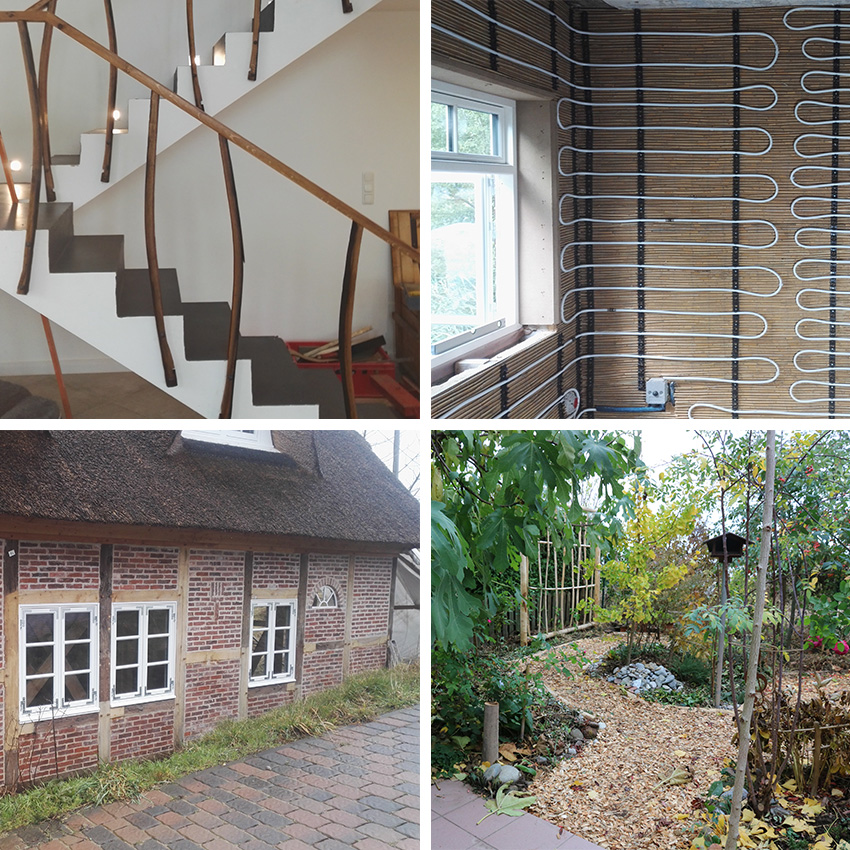
Yes, we're now in our fifth year. Our focus is on building with natural building materials and on the renovation and preservation of old houses. That's my personal favourite area: timber-framed houses, farmhouses and other traditional, original houses. We actually cover the whole range there, apart from electrical installation and heating work. (Except wall heating, of course – we do that too.) We cover carpentry, joinery and masonry work. We can renovate the building envelope, repair timber framing, masonry, windows and doors, do the entire interior fit-out or even a roof renovation. We can essentially offer an all-inclusive package.
Don't you even do garden design as well?
Well, not really. At the beginning I had two projects. Unfortunately, that didn't develop any further. One of my employees is a trained landscape gardener. So we can handle outdoor work too, but sadly there's no demand for it round here.
How did you get into the trade?
Craftsmanship was already a thing for me as a child. My grandad encouraged me a lot and taught me a great deal. My parents also gave me the opportunity by giving me a small workbench and tools.
How long have you been building close to nature? Was there a trigger?
I've been doing this for ten years now. Before that, I did conventional building work. Back then I was handling plasterboard and mineral wool. But I never really enjoyed it. For my first flat of my own, I was determined to use clay plaster. That was really the starting point. The business has always worked with natural building materials.
Which trade did you learn?
I'm a trained joiner. Clay came into it gradually. Fortunately, the joinery where I did my apprenticeship was also a business focused on natural building materials. We worked with clay boards and clay plaster there and also installed clay wall heating. That was followed by a few years at a carpentry firm. There I did a lot of timber-frame renovation and filled the panels the way it used to be done, i.e. soft bricks laid in clay mortar and pointed with lime. So more and more clay came into it, until I finally said: yes, I can offer this now too.
Your speciality is renovations and conversions. Why do you enjoy it so much?
On the one hand, we often find the old building fabric more beautiful and therefore like to preserve and protect it for aesthetic reasons. On the other hand, from a building-biology perspective it naturally always makes much more sense to renovate and preserve an old house than to demolish it and put up something new. The consumption of resources is simply much lower. Of course, the amount of work involved is higher, which is why many people decide against it after all. Demolishing with machinery and building new is quicker and often cheaper too. Materials are fairly inexpensive nowadays, especially conventional ones. But the amount of material you save by preserving buildings is simply enormous.
Do you also do new builds? Are they even still in keeping with the times? And if so, how?
We do new builds, but more in the form of extensions or additional storeys. We haven't built a detached house yet, but we would. However, only as a straw bale building, which is also how we do the extensions, or as a traditional post-and-beam or timber frame construction with the walls then built from hemp-lime blocks. In my opinion, those are the two options that are still justifiable. For example, I don't think solid timber houses are OK either. I'm not that keen on wood-fibre insulation either. Hemp is simply much better and grows back much faster.

How did you come to take on the current deconstruction project? After all, it is the first of this scale. You are dismantling an entire house. Why are you doing this?
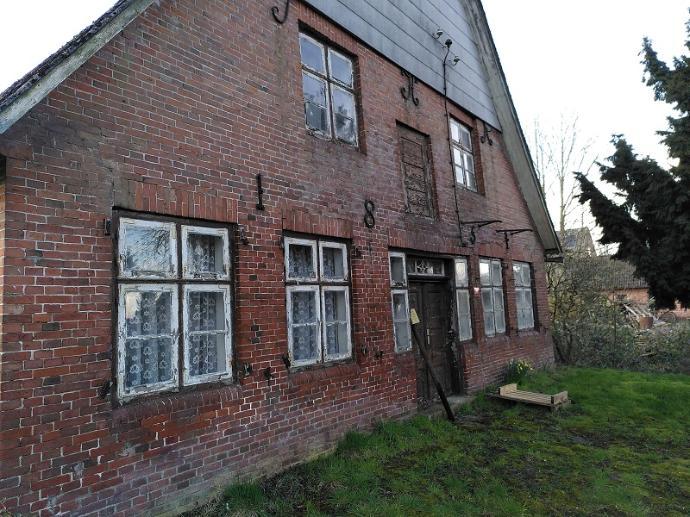
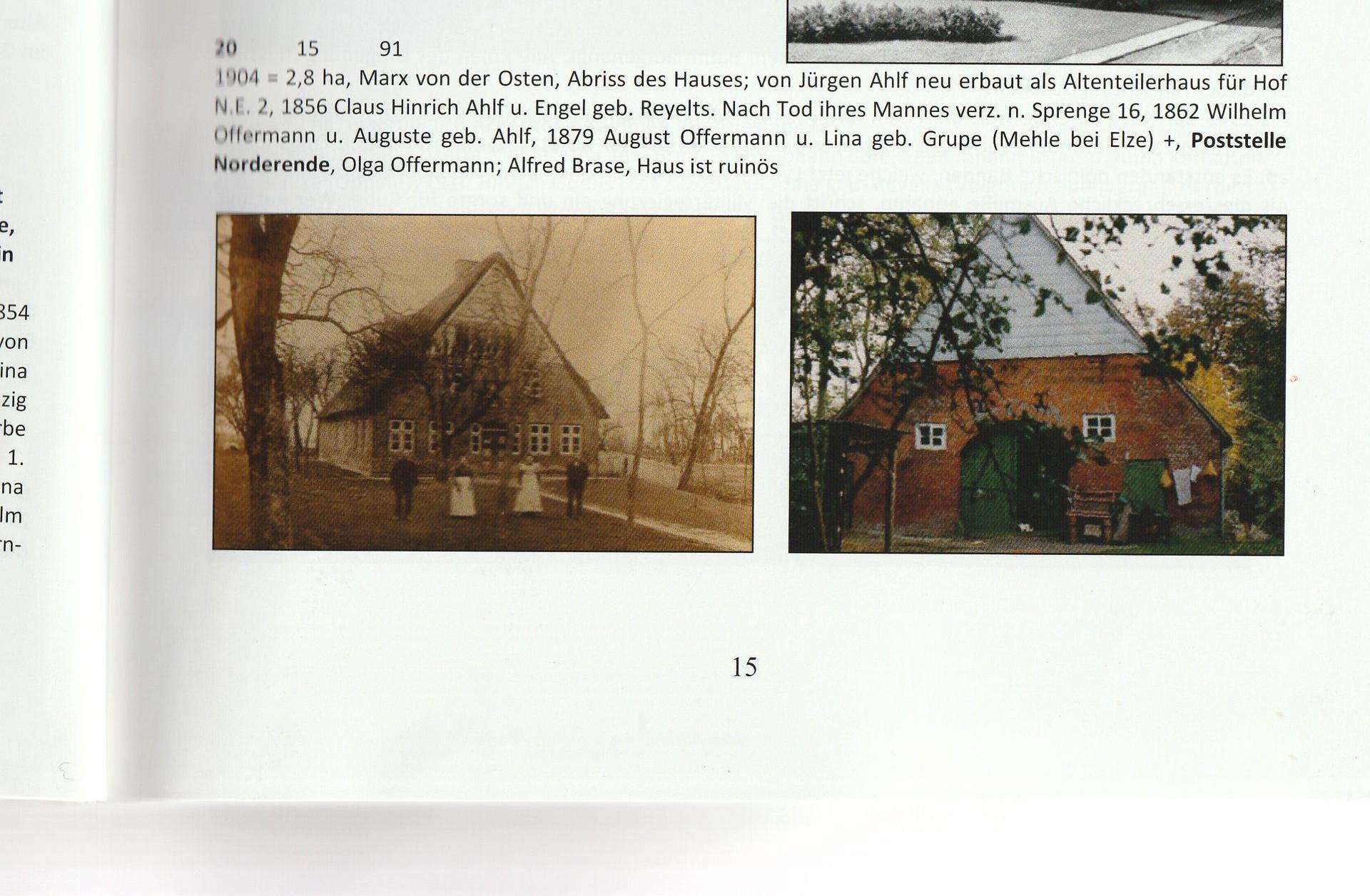
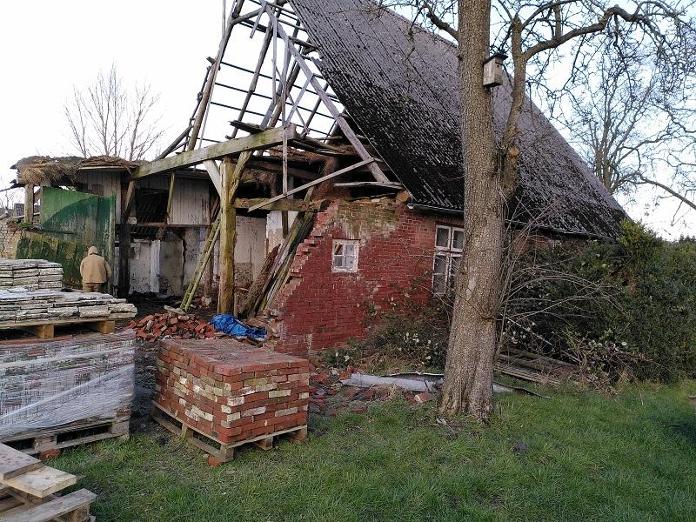
A woman who knew that I'm interested in historic bricks and building materials approached me. She had bought an old house in our village. It was still a listed building, but it was already so dilapidated that they are now allowed to demolish it. She wanted to know whether we'd be interested. We went over, negotiated and soon got started. At first it was a bit too big for me, too. They had imagined that we would do the demolition and simply get the material in return. But that wasn't possible. A lot of the material is no longer worth anything, many of the timber parts were rotten, no great oak timber framing. There was asbestos on the roof. The asbestos removal alone costs so much. The buyer definitely had to make a financial contribution there. So, bit by bit, we came to an agreement. I would have been so annoyed if we hadn't dismantled it completely. Especially once we realised that everything had been laid in clay mortar and could be dismantled extremely easily. At first I thought: OK, we'll dismantle ten pallets, just for our own needs when we do timber-frame renovation. But it quickly became clear that we had to do more. It would be such a shame if it all ended up as rubble again. So I got back in touch and said: we'd like to dismantle more after all, and that's how it developed. Now, from March onwards, we're dismantling more and more.
And you mainly salvage the old bricks? Or windows and doors too?
Exactly, we also remove windows, doors and reclaimed timber. Of course, there's also a lot of material, especially timber, that is no longer worth preserving. But even there, time and again there's something worthwhile that I put into storage for the time being.

Why do you do this? Why do you think recycling or circular construction is so important?
Well, I live right next to a sawmill, so I often see what kind of timber is transported past my home. Then there's also a pretty big demolition company in our village – one of the ten largest in the world. They have a recycling yard where we sometimes take things too. So every day we see how much new material is sold on the one hand and how much old material is simply ripped out and scrapped on the other. All of it involving heavy machinery and a lot of transport. Forty-tonne lorries are constantly rattling past. You also see a lot of demolition projects round here. When I drive past an old barn and the excavator is just taking the roof down and roughly sorting timber and stones, my immediate thought is: I absolutely have to come back today and talk to them about us salvaging a few materials. Most of the time I don't even manage it in my day-to-day routine, and the next day they've already started carting it away. Getting hold of these old, authentic materials isn't that easy at all, because in our rationalised, economised society they disappear so quickly! Some of it is superb material, such as beams with generous cross-sections ten metres long. They simply end up as waste and get burned.
This all reminds me a little of food rescue, the dumpster-diving movement and the foodsharing that grew out of it. Are the building material rescuers also networked with one another, and do they let each other know?
There are actually historic building material dealers in every federal state. It's nothing really new. They've been around for twenty years. Ziegelhof Kalleby is quite well known. He deals almost exclusively in bricks and a few old doors. Kalleby now has over 150 different old formats in his yard and storage for over 100,000 bricks. That means he can, of course, serve almost every customer. It took him twenty years to get there. There are quite a number of historic building material dealers. In our district, or in our area, there's actually nobody yet; the nearest is about 100 km away. So we would be the first here to run it in this way, and we could, because there's a lot of old building stock here that is then usually demolished or scrapped. I had actually thought about building up more of a network with the demolition companies, because I'm taking work off their hands, after all. They simply save money, too. You have to create these incentives. In my district in particular, a lot of this hasn't really caught on yet. We have conservative-liberal (black-yellow) local politics, so people are very conservative and climate protection isn't a big issue yet. The slogan “Geiz ist geil” (“stinginess is cool”) rules here. The people where we're currently dismantling, for example, also just wanted to save money.

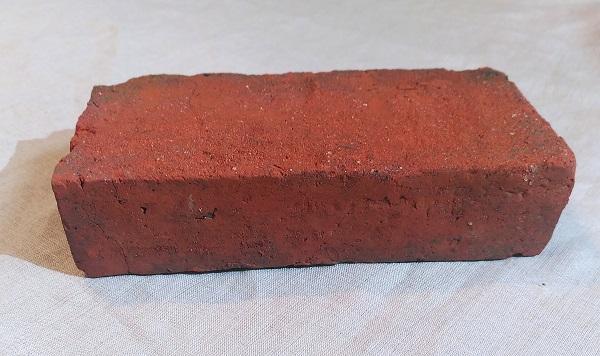
We think what you are doing is great, and we're delighted to now have the bricks in our online shop. So what happens to the bricks first after the deconstruction?
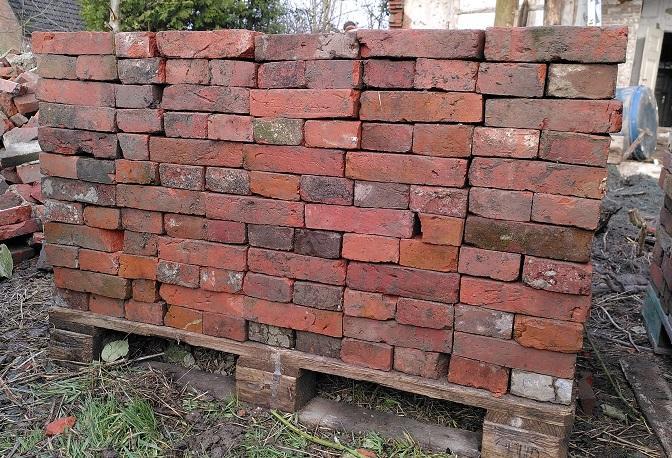
We clean them and stack them straight onto a pallet. Then we transport them to our yard, which isn't far away, and they're stored there for the time being. I sell and use them myself, and we also sell them through the Lehm-Laden.
Hi Raffael, it's David. I've just come in. I've just sold your floor.
Hello David, really? That's really lovely. Great! Thank you!
It works! You said that you were so pleased when you realised that everything had been laid in clay mortar, and that this was the deciding factor in your decision to deconstruct the entire house. Why is clay mortar so important for the recyclability of buildings?
Because they are laid in clay, the bricks can be released extremely easily. With other materials, even lime, the brick can still be reclaimed, but it is more difficult. You need more force and more hammer blows, or perhaps even a small chipping hammer. That's because lime actually sets, whereas clay “only” dries. With cement, it's like this: as soon as bricks are laid in cement, they are practically impossible to reclaim because they are bonded so strongly, especially if we are dealing with a soft brick. The brick breaks very quickly. With clay, you can almost just pick the bricks up. A few blows with a large rubber mallet on the top course are enough to free the bricks from their mortar bed. Then you take the brick, scrape over it once with the trowel to remove the mortar residue, and that's it. The best choice as far as C2C is concerned.
What would you wish for the future of building?
I would like to see more awareness developing among people who build that it isn't important to have golden taps while what's behind them doesn't really matter. I have the impression that many businesses work this way because, for many people, the most important thing is that it looks chic or prestigious in the end. What the quality behind it is like doesn't matter, or the budget has been spent in another (in my opinion the wrong) place. The businesses that work like this are successful. If clients didn't put prestige so much in the foreground and had more awareness of quality, cycles and the life cycle of building materials, a great deal could change automatically. It's not only the construction companies that build badly, but also the customers who want it that way.
Dear Raffael, thank you very much for the fascinating conversation!
My pleasure! Thank you very much for your interest!