Universal clay plaster for high-quality wall surfaces
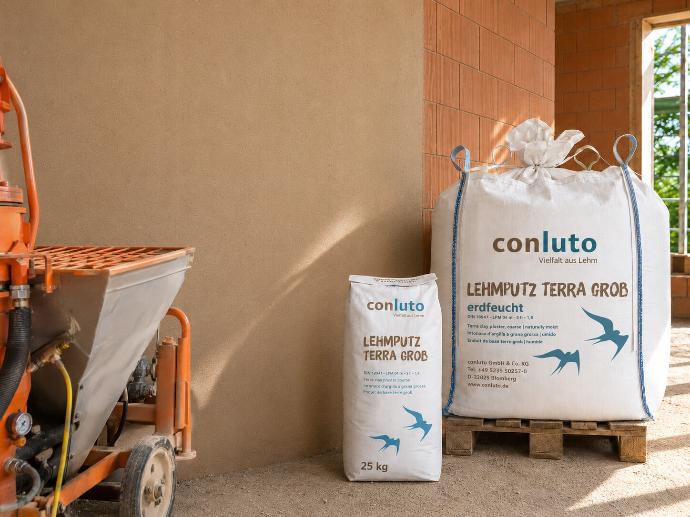
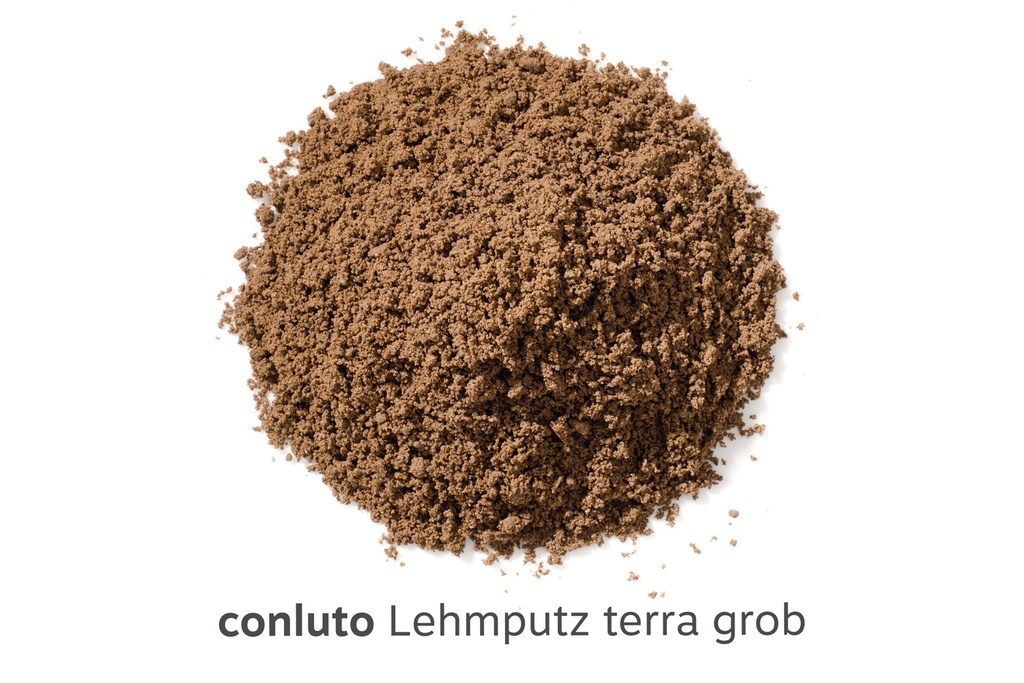
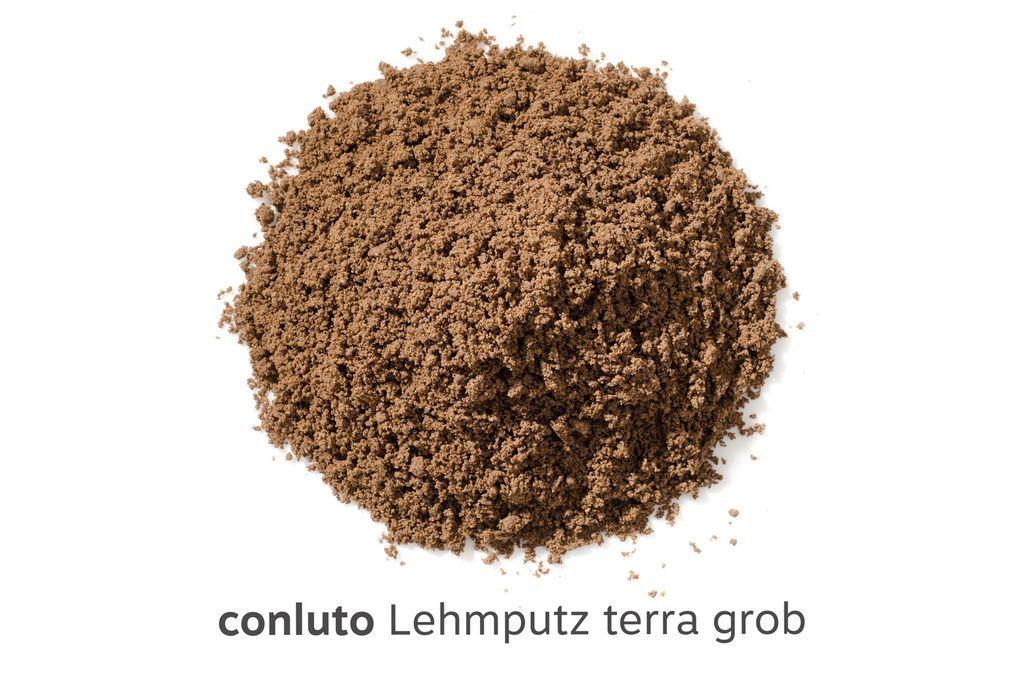
conluto terra coarse (earth-moist) is a high-quality, all-purpose clay plaster for interiors with natural building materials, renovation projects, and professional plastering systems.
It is suitable as Clay base plaster and Clay finishing plaster and creates a stable base for authentic wall surfaces with a noticeably homely finish.
Whether on masonry, reed matting, light clay formwork or wood softboard: terra grob is suitable for many typical substrates in clay construction. It is also a reliable choice as a base plaster in the conluto internal insulation system with wood fibre insulation board.
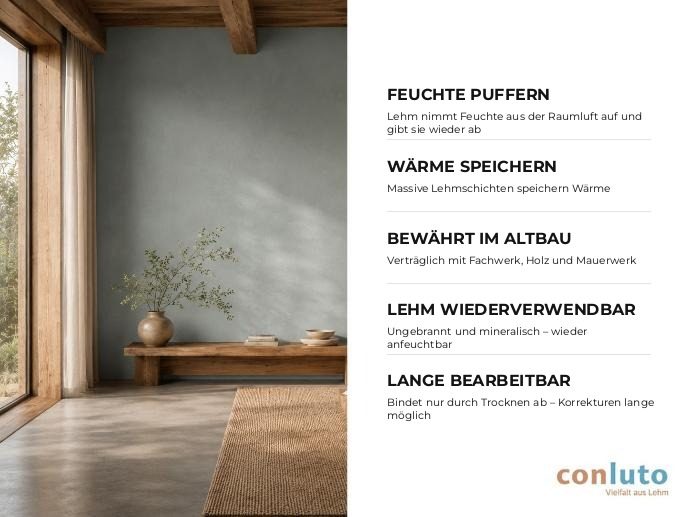
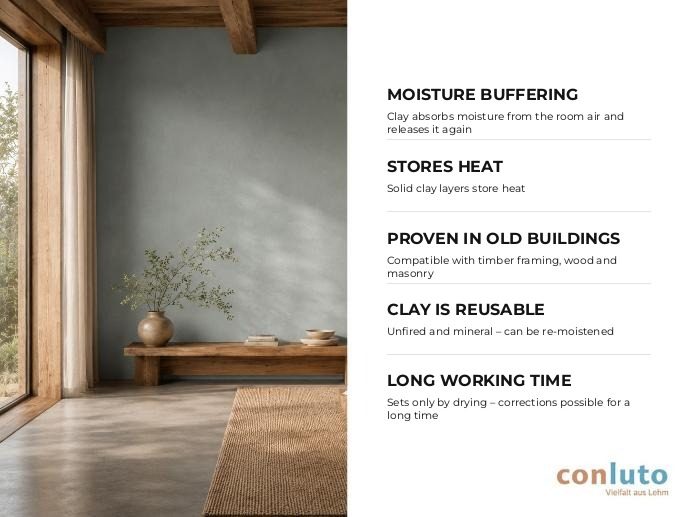
Clay universal plaster: properties at a glance
- Clay universal plaster for base plaster, finishing plaster and levelling plaster
- For masonry, Reed, Light clayformwork and Wood fibre insulation boards
- Very high adhesive strength: 0.31 N/mm²
- Dimensionally stable plaster build-up thanks to an optimised formulation
- Controlled drying behaviour for evenly drying surfaces
- Strength class S II
- Application thickness 5–15 mm
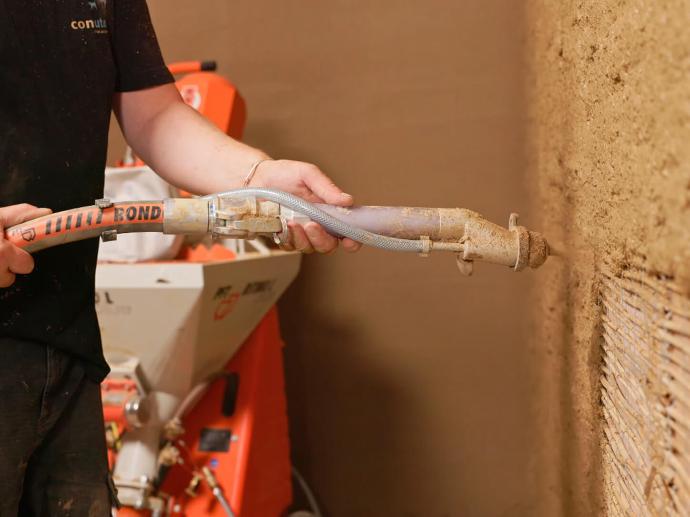
- Suitable for machine application for efficient working
- Without straw and without grasses
Apply universal plaster efficiently – even on large surfaces
Thanks to its exceptionally high application thickness of 5–15 mm, the machine-applicable clay universal plaster produces a ready-to-paint surface in a single pass. When covered, the mixed material remains workable for several days – practical for well-planned workflows on site.
Because it is formulated without straw or grasses , terra grob also has unlimited shelf life when stored correctly. If Reinforcement mesh is required, it can be embedded directly. For a particularly even finish, a two-coat build-up is recommended.
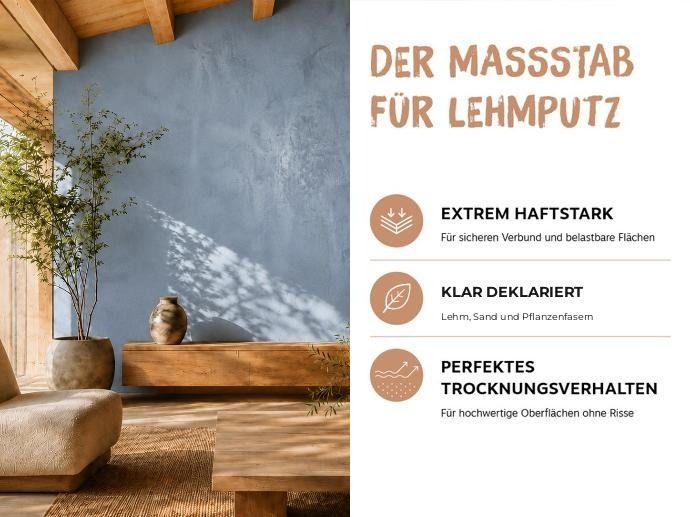
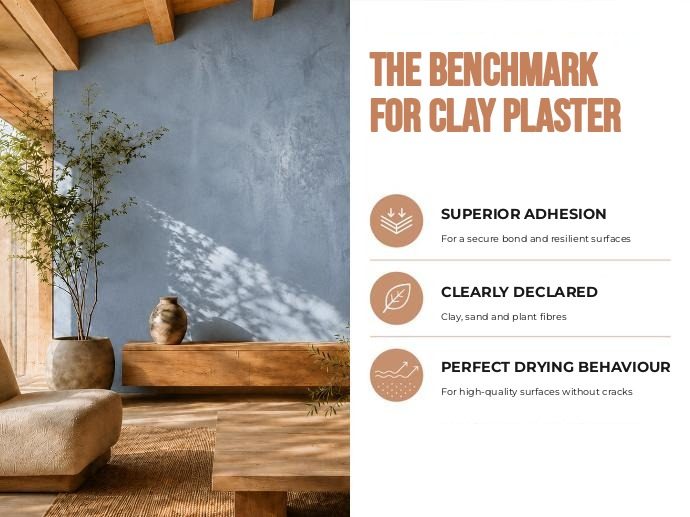
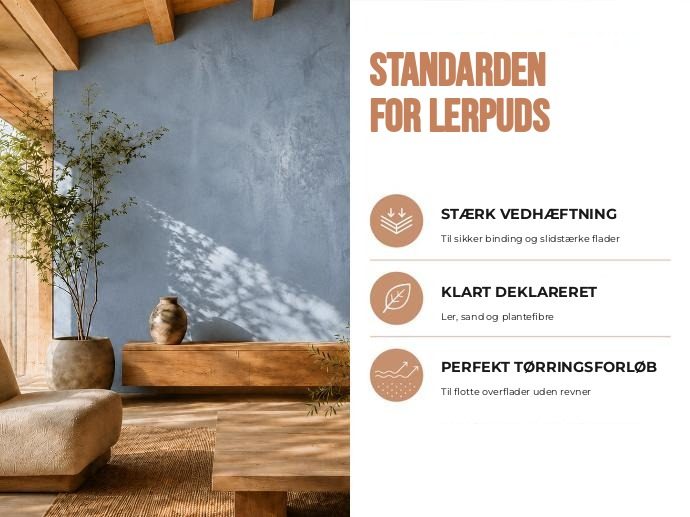
Precisely calibrated formulation for robust quality
In conluto terra grob, clay, sand and aggregate are precisely matched to one another. The optimised grading curve supports a reliable bond, pleasant workability and even drying of the surface. The result is a calm, dimensionally stable plaster build-up with a high-quality surface appearance.
Purely mineral – without straw or grasses
Terra coarse contains no straw and no grasses. This makes the clay plaster particularly suitable for sensitive users and for projects that call for a purely mineral formulation. At the same time, it brings the typical benefits of clay to the wall: vapour-permeable surfaces, the characteristic tactile quality of clay and a pleasantly balanced feel to the room.
Frequently asked questions about clay universal plaster
What are the disadvantages of all-purpose clay plaster?
Clay universal plaster requires a suitable substrate, professional application and rapid, frost-free drying. It is not suitable for permanently damp areas or areas heavily exposed to splash water. Used correctly, it is ideal for vapour-permeable interiors.
How much does clay universal plaster cost per m²?
The costs depend on the substrate, application thickness, condition of the surface and the desired finish. A thin application on an even substrate is less expensive than a multi-layer build-up with reinforcement or a finishing coat. Lehm Universalputz can buffer fluctuations in indoor humidity and is classified as water vapour sorption class WS III to DIN 18947.
Which substrates does clay universal plaster adhere to?
Clay universal plaster adheres to many sound interior substrates such as masonry, clay bricks, clay building boards, suitable plaster bases and firm existing plaster. The substrate must be clean, dry, keyed and free from separating layers. Smooth or critical surfaces require suitable pre-treatment.
What layer thickness should clay universal plaster have?
The appropriate coat thickness depends on the substrate and the desired build-up. Thinner coats are possible on even surfaces, while thicker layers may be advisable for levelling work. Multi-coat build-ups should be allowed to dry sufficiently between coats.
What do you need to bear in mind with clay universal plaster?
Key factors are testing the substrate, a suitable primer, the correct layer thickness and controlled drying. Loose, dirty or permanently damp substrates are unsuitable. Where materials change or in areas prone to cracking, reinforcing mesh may be advisable.
Where does clay universal plaster make sense?
Clay universal plaster is particularly suitable for interior finishing with traditional building materials in living rooms, bedrooms, children's rooms, hallways, studies, as well as domestic kitchens and bathrooms outside wet zones. Combined with clay paint, fine clay plaster or decorative clay finishing plaster, it creates a coherent wall build-up.
Does clay universal plaster provide thermal insulation?
Clay universal plaster is not an insulating material but an interior plaster that can buffer fluctuations in indoor humidity. It can store heat and buffer moisture, but it does not replace thermal insulation. For insulation purposes, special light clay or insulating plaster systems are suitable.
Which clay plaster is the best?
The best clay plaster depends on the substrate, use and desired surface finish. Lehm Universalputz is particularly suitable for versatile interior plastering work. For finer or coloured surfaces, clay fine plaster, clay filler, clay decorative plaster or clay paint can be added.
Can I apply clay paint directly onto clay universal plaster?
Yes, clay paint can be used on fully dry clay universal plaster, provided the surface is sound, dust-free and evenly absorbent. Depending on the surface, a primer may be advisable. Vapour-permeable clay paints are a particularly good match for the system.
Handelsmarke Adresse
conlutoDetmolder Str. 61-65, 32825 Blomberg, Deutschland
+49 5235 502570
info@conluto.de