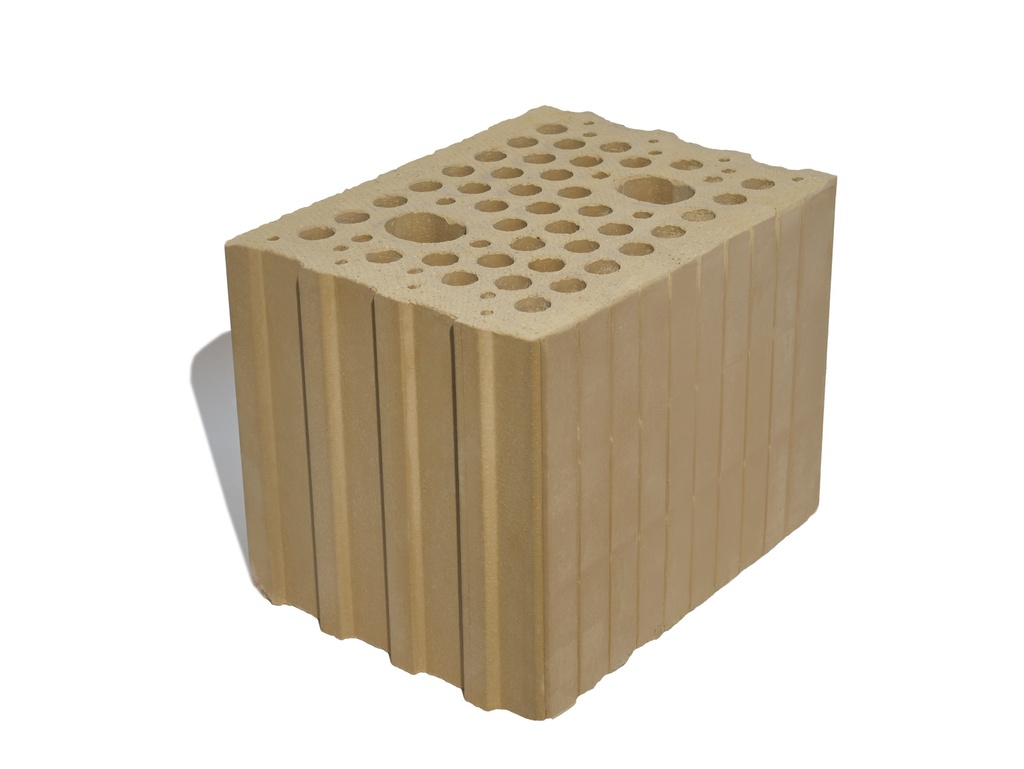

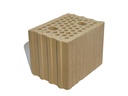
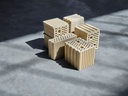
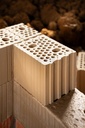


Clay brick LZ 24
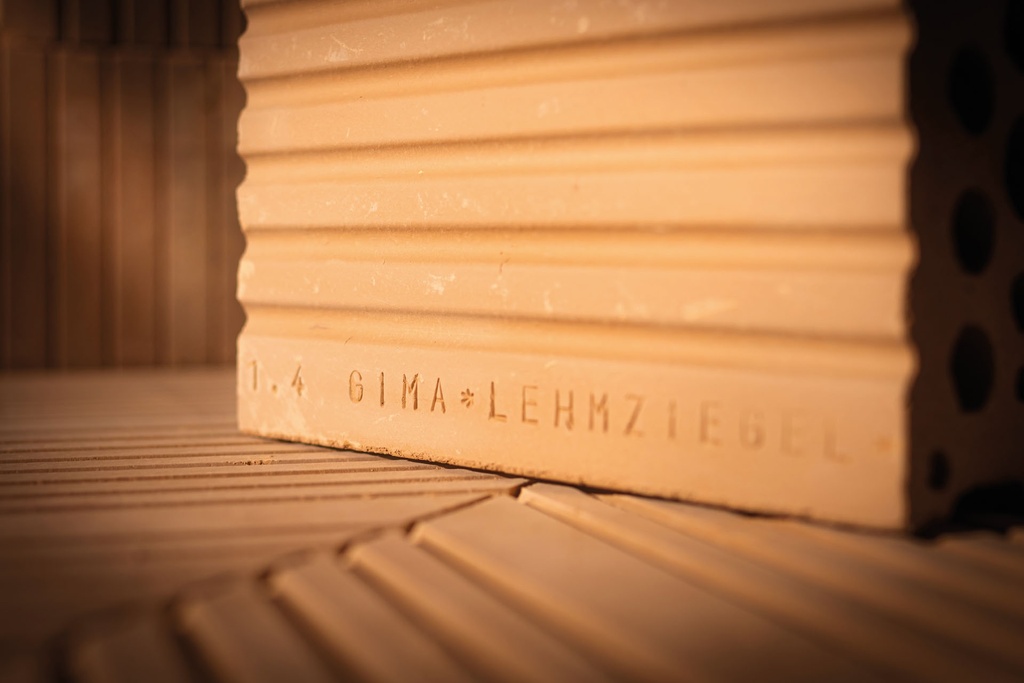
Modern load-bearing masonry block made of 100% pure clay – unfired, merely dried at approx. 80 °C. Fully dismantlable and reusable. General building authority approval Z-17.6-1306 (DIN 18945, valid until 03/2030).
TECHNICAL DATA
Compressive strength class: 5
Bulk density class: 1.6 kg/dm³
Thermal conductivity: λ = 0.73 W/(m·K)
Laying: thin-bed mortar, 2–3 mm joint thickness
Fire protection:
REI 30 from 175 mm wall thickness
REI 60 from 240 mm wall thickness
REI-M 90 from 240 mm wall thickness
FORMATS AND PALLET UNITS
LZ 11 – 372 × 115 × 249 mm – non-load-bearing – ~11 pcs/m² – 80 pcs/pallet (890 kg)
LZ 17 – 372 × 175 × 249 mm – non-load-bearing – ~11 pcs/m² – 48 pcs/pallet (790 kg)
LZ 24 – 307 × 240 × 249 mm – load-bearing – ~13 pcs/m² – 36 pcs/pallet (815 kg)
LZ 30 – 247 × 300 × 249 mm – load-bearing – ~16 pcs/m² – 45 pcs/pallet (815 kg)
INSTALLATION
Lay the first course on fired bricks with a horizontal damp-proof course.
Minimum height 30 cm above ground level. Weather protection required during the construction phase.
Compatible with clay plasters.
GIMA clay bricks – load-bearing clay blocks for circular construction
With GIMA clay bricks, you bring a modern, load-bearing masonry unit made of 100 % raw clay to your building site – with no firing process at all. At GIMA, the bricks are merely dried, not fired, which significantly reduces energy consumption and CO₂ emissions during production.
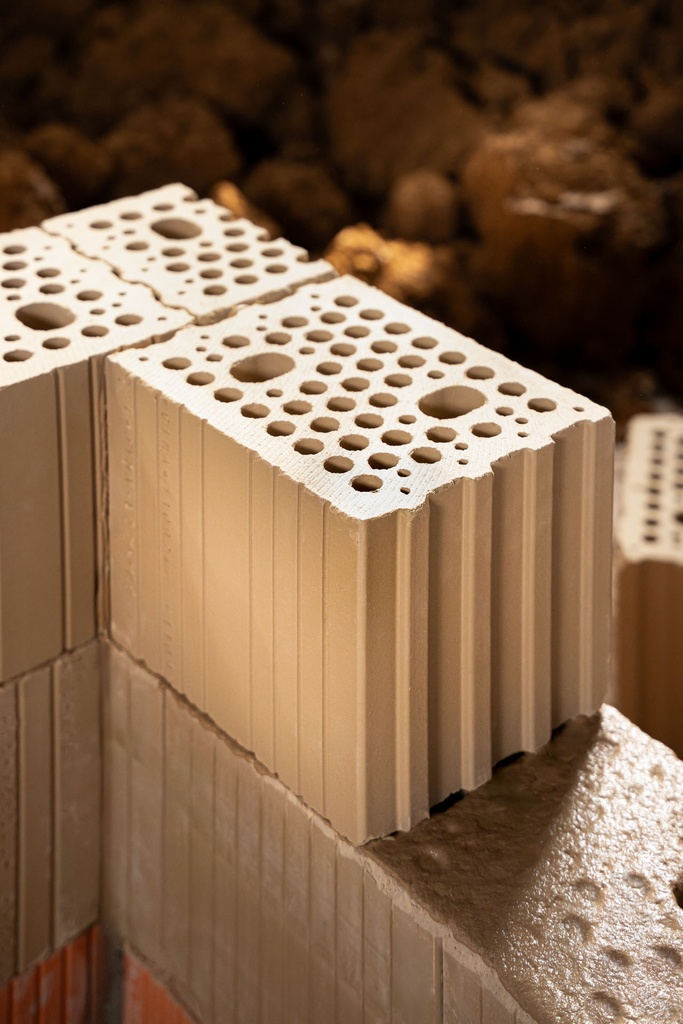
Thanks to the general building authority approval (DIN 18945, Z-17.6-1306) and the general type approval for clay block masonry laid in thin-bed mortar, GIMA clay bricks can be used for load-bearing walls up to building class 5, and they can be laid almost as efficiently as conventional precision blocks.
At Lehm-Laden you'll get the right system advice to go with it: from thin-bed clay mortar and clay plaster through to wall build-ups and details.

Formate und Einsatzbereiche
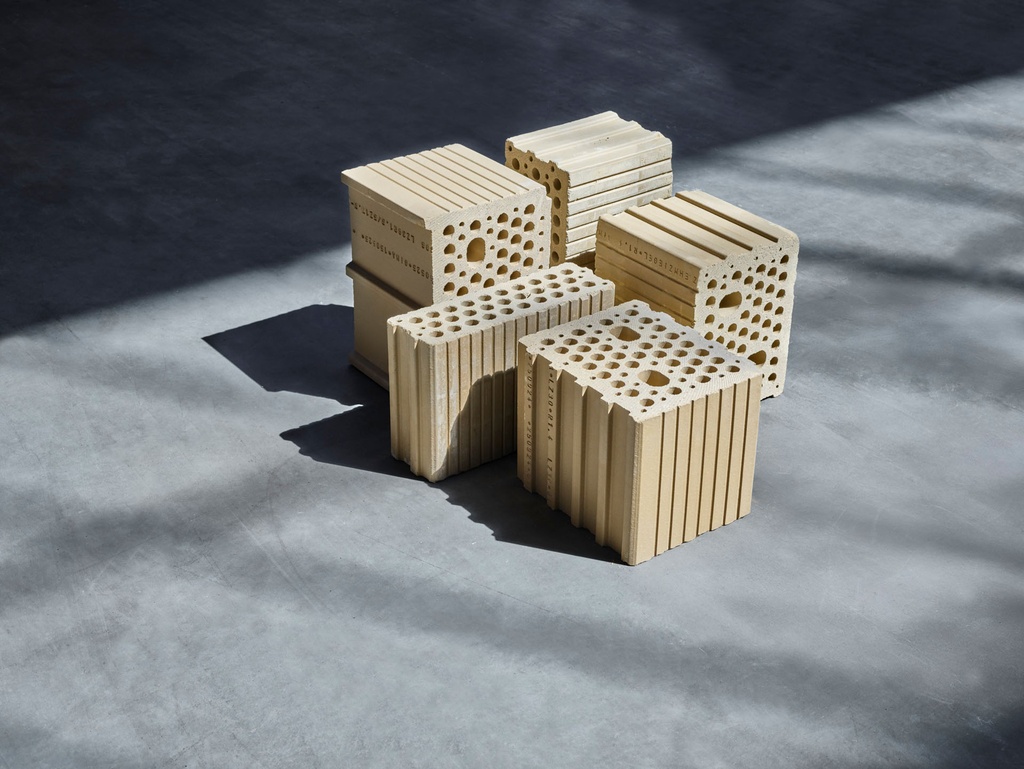
The current GIMA clay bricks are available as vertically perforated bricks in four formats. All bricks are compressive strength class 5 and approved for the thin-bed mortar method.
LZ24 – for load-bearing interior and exterior walls
- Länge: 307 mm
- Breite: 240 mm
- Höhe: 249 mm
- Bedarf: ca. 13 Steine/m²
- Paletteninhalt: 36 Stück
LZ30 – for load-bearing interior and exterior walls
- Länge: 247 mm
- Breite: 300 mm
- Höhe: 249 mm
- Bedarf: ca. 16 Steine/m²
- Paletteninhalt: 45 Stück
LZ11 – for non-load-bearing interior walls
-
Länge: 372 mm
-
Breite: 115 mm
-
Höhe: 249 mm
-
Bedarf: ca. 11 Steine/m²
-
Paletteninhalt: 80 Stück
LZ17 – for non-load-bearing interior walls
-
Länge: 372 mm
-
Breite: 175 mm
-
Höhe: 249 mm
-
Bedarf: ca. 11 Steine/m²
-
Paletteninhalt: 48 Stück
If you would like to see the look and feel for yourself first, you can order a GIMA clay brick hand sample from the Lehm-Laden – currently with a short description and data sheet download in our shop.

Application within the system – what you should look out for
GIMA clay bricks are designed as a system building material. For safe and durable masonry, it is important that construction and installation follow the general building authority approval.
Kimmschicht & Feuchteschutz
-
The first layer is laid on a levelling course of moisture-resistant fired bricks.
-
A horizontal damp-proof membrane is placed between the floor slab and the levelling course as protection against rising damp.
-
The height of the levelling course must be chosen so that the ground and splash-water zones are taken into account – at least approx. 30 cm above ground level is recommended.
Weather protection on site
Clay is sensitive to rain and prolonged saturation. During the construction phase and storage, blocks and masonry must be protected from precipitation and ground moisture with suitable covers (e.g. tarpaulins, sheeting).
Dünnbettmörtel und Verarbeitung
-
The masonry is laid with Lehmdünnbettmörtel, which is applied in a similar way to conventional thin-bed mortar.
-
The mortar is applied 2–3 mm thick; the joints harden purely by drying.
-
The blocks are laid tightly butted, i.e. with close-fitting joints, and without mortar in the head joints in single-leaf masonry (in accordance with the approval and DIN 18945).
Plaster build-up & combination with other building materials
GIMA clay masonry is usually finished with clay plaster. It can easily be combined with other building materials – e.g. with fired bricks, timber or concrete – provided the connection details are planned accordingly.
If you are planning a specific project (e.g. a detached house in solid clay construction), we will be happy to support you with suitable system products and contacts for planning documentation.
Handelsmarke Adresse
Girnghuber GmbHLudwig-Girnghuber-Straße 1, 84163 Marklkofen, Deutschland
0 87 32 / 24 0
info@gima-lehmziegel.de