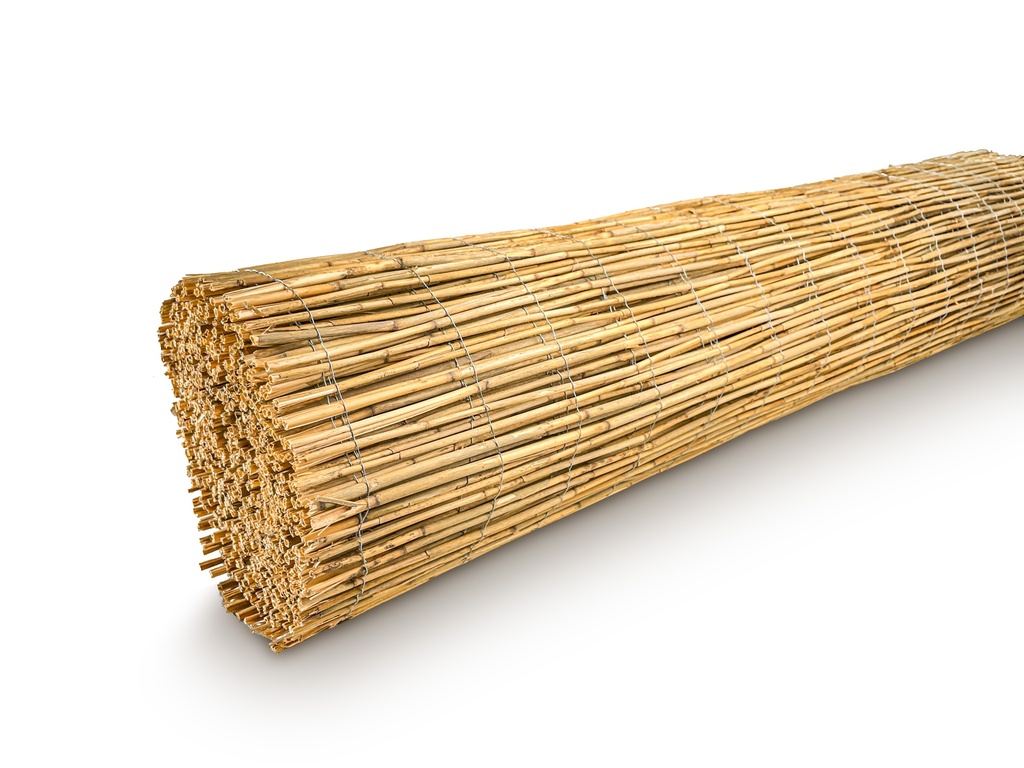
Reed plaster base mesh 15 m²
As plaster base mesh: on walls and ceilings indoors for clay plasters and lime plasters, to stabilize thick leveling layers. As permanent formwork: for light clay inner shells made of expanded clay or wood-light clay, as well as for light clay walls.
Conluto holding plate, galvanised
for fixing clay building boards
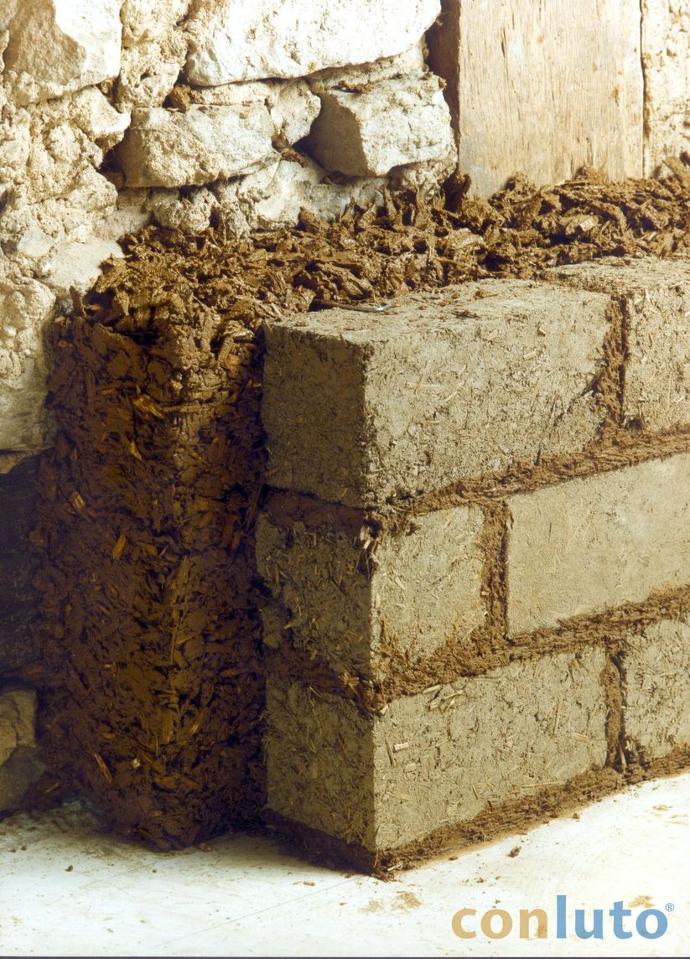
- Light clay blocks NF 1200 are particularly suitable for filling timber-frame infill panels
- Light clay blocks can be used indoors for non-load-bearing masonry and lining walls
- production process modelled on traditional hand moulding
Application class (AK) 1a defines the possible uses of the blocks. Blocks with this application class are approved for laying in timber-frame infill panels, with weather protection provided by an external lime plaster.
All light clay blocks can be used indoors for non-load-bearing walls and lining walls. A lining wall is built in front of an existing wall, and the resulting cavity is filled with light clay. This gives you homogeneous internal insulation that is vapour-permeable and capillary-active. Unlike board materials, this produces no offcuts whatsoever.
Conluto holding plate, galvanised
for fixing clay building boards
- Light clay blocks NF 1200 are particularly suitable for filling timber-frame infill panels
- Light clay blocks can be used indoors for non-load-bearing masonry and lining walls
- production process modelled on traditional hand moulding
Application class (AK) 1a defines the possible uses of the blocks. Blocks with this application class are approved for laying in timber-frame infill panels, with weather protection provided by an external lime plaster.
All light clay blocks can be used indoors for non-load-bearing walls and lining walls. A lining wall is built in front of an existing wall, and the resulting cavity is filled with light clay. This gives you homogeneous internal insulation that is vapour-permeable and capillary-active. Unlike board materials, this produces no offcuts whatsoever.
Conluto holding plate, galvanised
for fixing clay building boards
- Light clay blocks NF 1200 are particularly suitable for filling timber-frame infill panels
- Light clay blocks can be used indoors for non-load-bearing masonry and lining walls
- production process modelled on traditional hand moulding
Application class (AK) 1a defines the possible uses of the blocks. Blocks with this application class are approved for laying in timber-frame infill panels, with weather protection provided by an external lime plaster.
All light clay blocks can be used indoors for non-load-bearing walls and lining walls. A lining wall is built in front of an existing wall, and the resulting cavity is filled with light clay. This gives you homogeneous internal insulation that is vapour-permeable and capillary-active. Unlike board materials, this produces no offcuts whatsoever.
Reed mat is a proven plaster base for clay plaster or lime plaster on timber
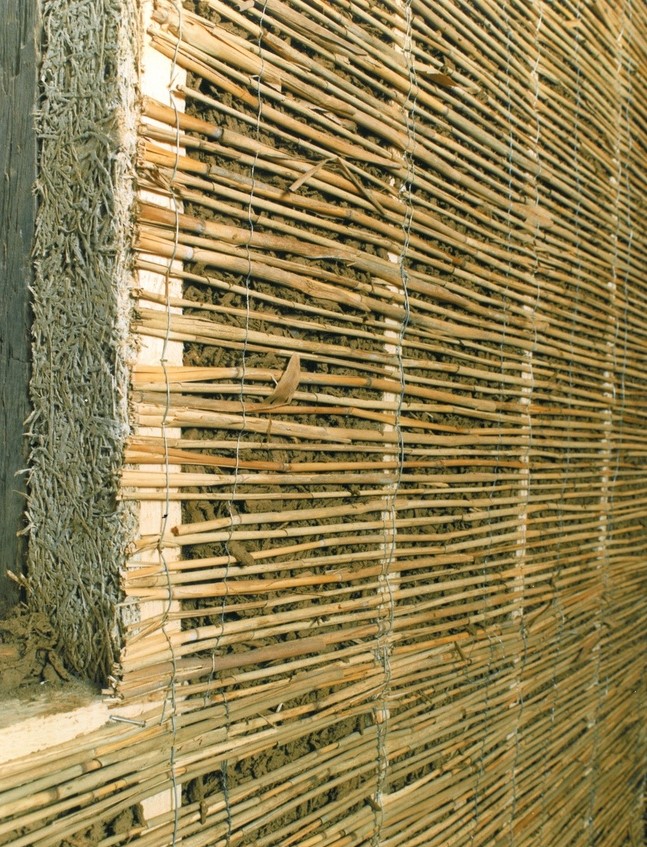
The gaps between the reed stalks and the rough reed surface ensure good adhesion of the plaster to the reed mat. The reed mat is fixed to the timber surface with staples, and the clay plaster is then applied by hand or with a plastering machine.
The reed is used as a plaster base on timber: for joining timber-frame beams in old buildings or with OSB boards in modern timber-frame construction. As an alternative to clay building boards, this reed mat is used in combination with timber boarding. Where required, wall heating systems are fixed onto it. Both are then plastered with clay in several layers.
go to the clay building boards

Conluto Reed Plaster Base
Reed mat is a long-proven plaster base for clay plaster or lime plaster on timber.
The gaps between the reed stalks and the rough surface of the reed ensure good adhesion of the plaster to the reed mat. The reed mat is fixed to the timber substrate with staples, and the clay plaster is then applied by hand or with a plastering machine. The reed is used as a plaster base on timber: for bridging timber-frame beams in old houses or on OSB boards in modern timber-frame construction. As an alternative to clay building boards, this reed mat is used in combination with spaced timber boarding. Wall heating systems are fixed to the mat where required. Both are then plastered with clay in several layers.
Handelsmarke Adresse
conlutoDetmolder Str. 61-65, 32825 Blomberg, Deutschland
+49 5235 502570
info@conluto.de