David: Great to have you here!
Oskar: Lovely to be here!
David: Tonight is the big Lehm-Laden party here, the very first one, and I'm absolutely delighted that you're here. Coming from Upper Bavaria, you've made an incredibly long journey. Where and how do you work? What kind of work do you enjoy most?
Hermann: Clay plaster, of course, is what we like best. It doesn't necessarily have to be close by; the main thing is that the client is decent and we have a nice clay plastering job. We're happy to travel further.
D: What makes a nice clay plaster job for you? Lots of volume or beautiful surfaces?
O: Yes, something that's challenging too.
H: Well yes, volume and of course high quality. Whether small or large, the quality always has to be right. The advantage of large sites is that you have less setup time, i.e. you don't plaster one room, then pack up again and plaster somewhere else. But smaller jobs can be interesting too. It's really the mix that makes it.
D: Yes, and Oskar, you said the work should challenge you. What do you mean by that?
O: It's fun to do something small now and then that isn't especially demanding, where you can switch your brain off for a bit. But when it really gets into the detail, that's fun too, that's challenging. What we particularly like doing is Fine plaster. We always keep the Yosima clay design plasters on site in full big bags, and we also mix the colour shade individually for our customers.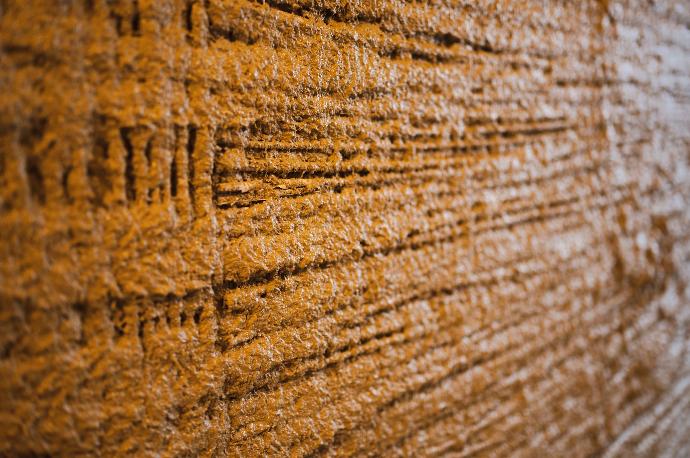
D: Are you involved in the planning as well? Or do you turn up, the architect has prepared everything and you just carry it out? Or to what extent do you still have a say?
H: By and large it's a mix. Half the time we have the architects who set their specifications, the other half is us advising on how to then implement or set it up. We often have customers who are looking for clay plasterers; they could have others, but they specifically want clay plasterers. For example, we plastered a Thoma house. The customer didn't want to let just any plasterer in; he needed a proper clay plasterer.
D: And when you say Thoma Haus, do you then deal with the people who are building, whom you advise? So do you know the people you're working for?
H: Yes, they come to us. In southern Bavaria there aren't many clay plasterers who also take on larger jobs. There are a few lone operators, but if the client insists that it gets finished within a certain time, then they need someone who can really get through the work.
D: Speaking of lone wolves. How are you experiencing the shortage of young talent? After all, there are two of you now.
O: There are 2.5 of us. We have one employee who works part-time for us, so three days a week. We're desperately looking for several employees.
D: Hermann, would you tell me how you got into clay building? What was your “original trade”?
H: I trained as a bricklayer. I then spent another two years doing my master craftsman qualification as a building construction technician and travelled to Africa. After the trip, I set up my own business in Wasserburg in 1987. At first we did a lot of old town renovation there. I've always been interested in organic food, organic building and plant diversity. For me, it all belongs together. Then in 1995, at the Schweisfurth family's in Hermannsdorf, I plastered with clay for the first time. Back then, Schweisfurth was a pioneer in the field of organic butchery.
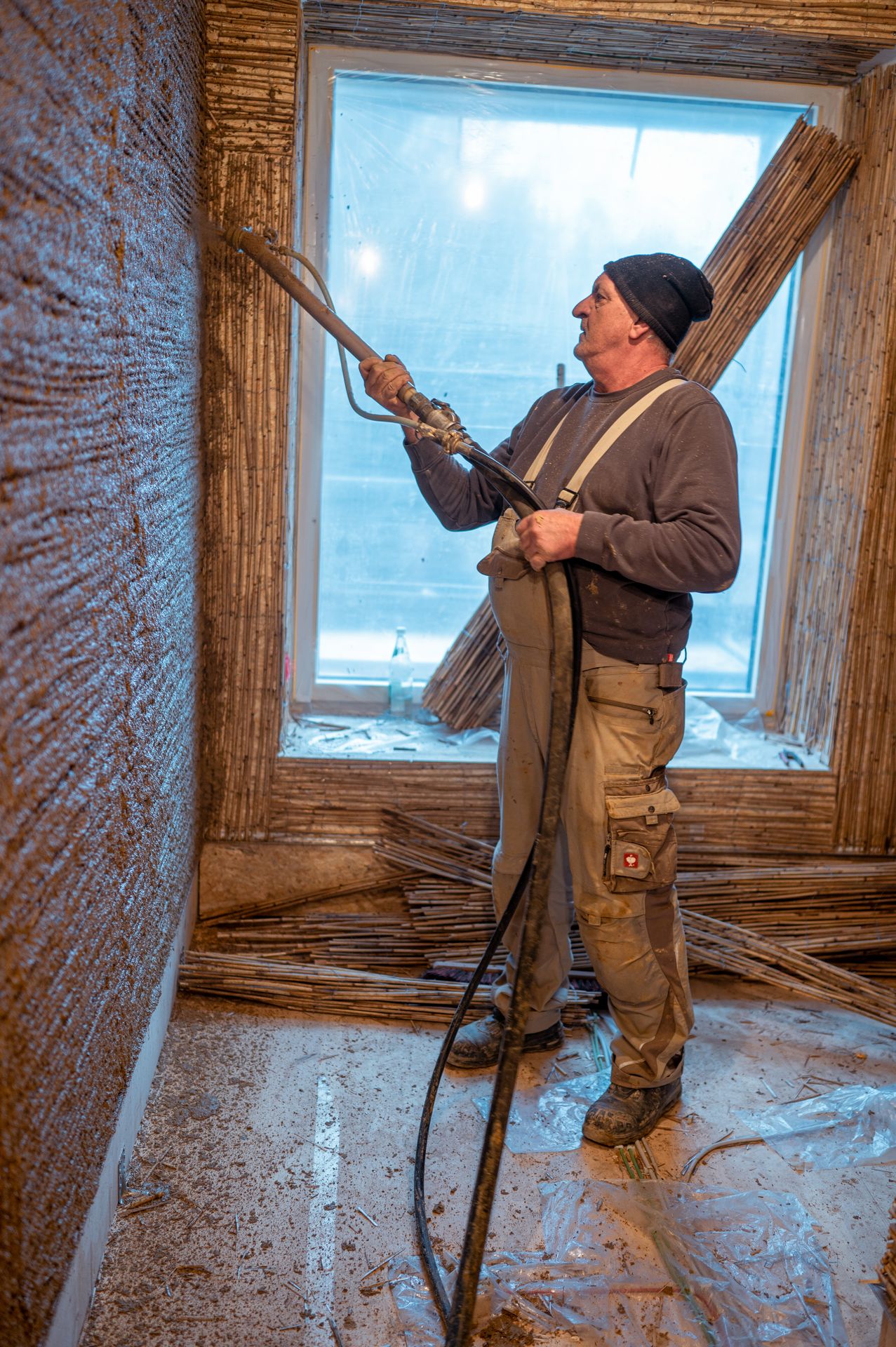
D: And do you now work exclusively with natural plasters, or do you sometimes still use cement plaster?
G: In Bavaria it's a bit difficult to work exclusively with clay. There are always times when there's not much work around, and then as a building firm you have to do other things too.
D: Would you like to tell us how old you are?
H: Yes, I was born in 1958. So I'm 64 now and I'll carry on working in my trade for a few more years.
D: Yes, that's crazy. I'm nearly 40 and my back already can't cope with it. Congratulations! And Oskar, as Hermann's son, you grew up with it.
O: Yes, it has simply always been part of it and it was fun. I just grew into it.
D: Have you worked in any other job along the way?
O: No, I trained straight away as a bricklayer. And then, yes, I did my master craftsman's and technician's qualifications, and now I'm also training as a building biologist at the IBN in Rosenheim.
D: The IBN is right around the corner. Do you have any connections there? Did you plaster the building?
O: We had the enquiry, but unfortunately we didn't have time. Sadly, we can't do everything. That's the problem.
D: You work a lot. Hermann, if you're still working at 64, you must be very well organised so that you can work in a way that saves your strength and energy, right?
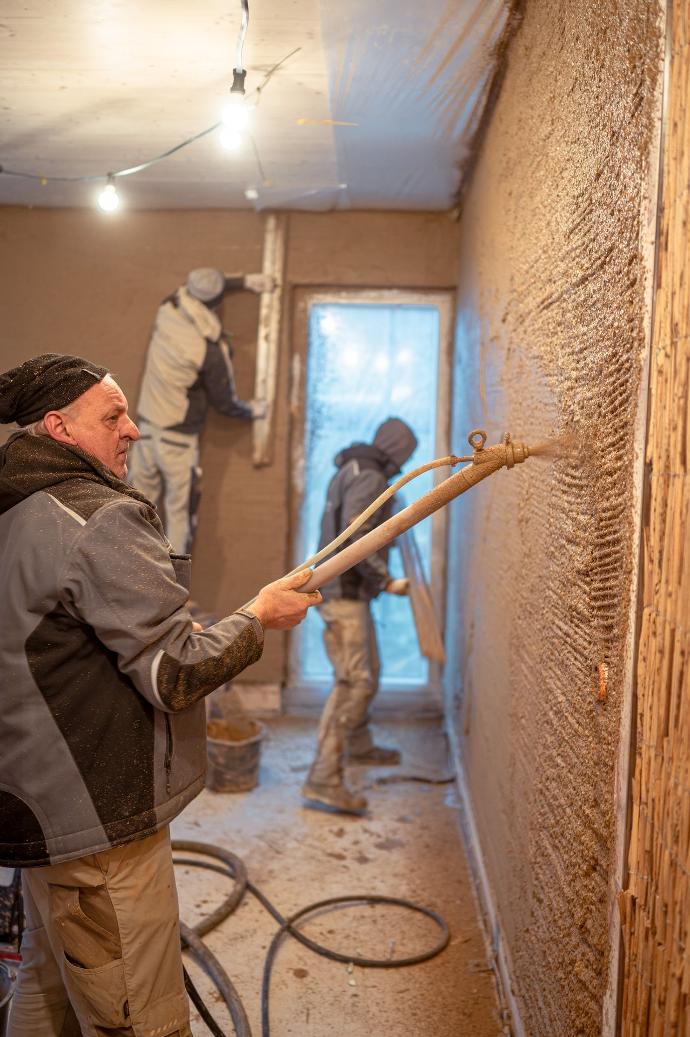
O: Yes, we do everything we can to make the work steps easier. We do a lot with a loader or pallet truck. On site we also have lightweight aluminium trestles, which make things a lot easier.
D: How old are you, Oskar?
O: 35
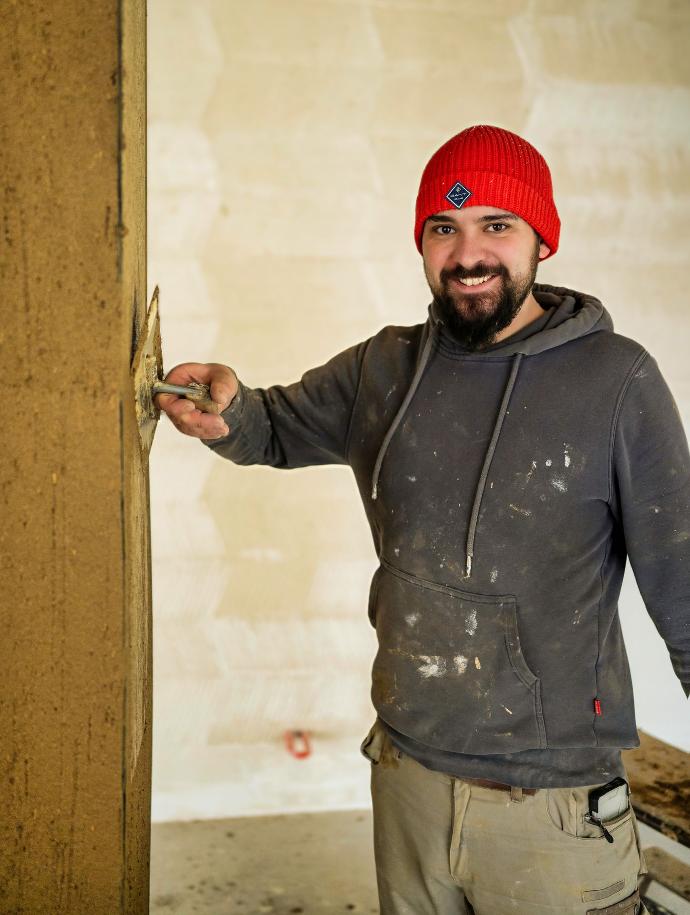
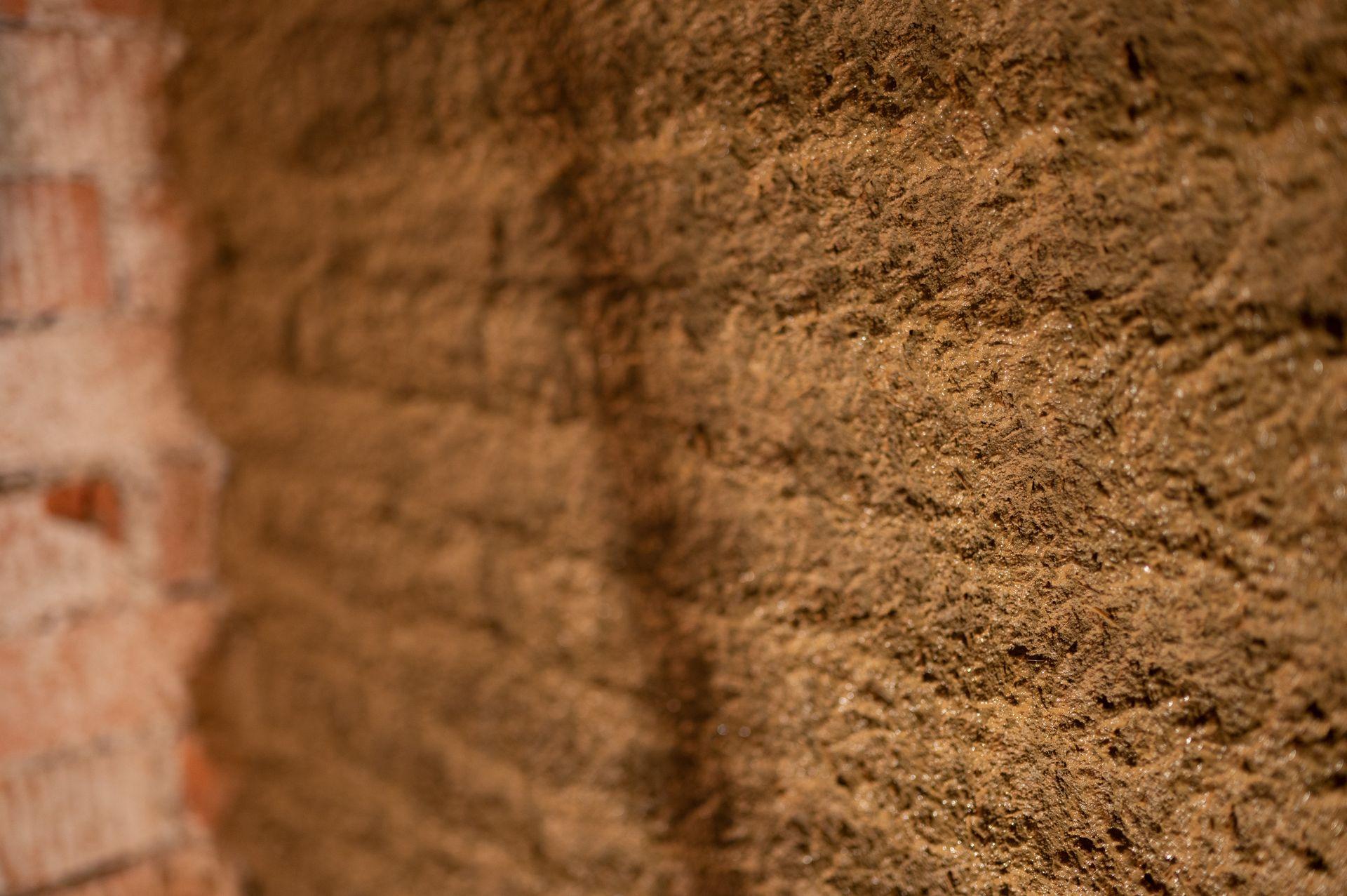
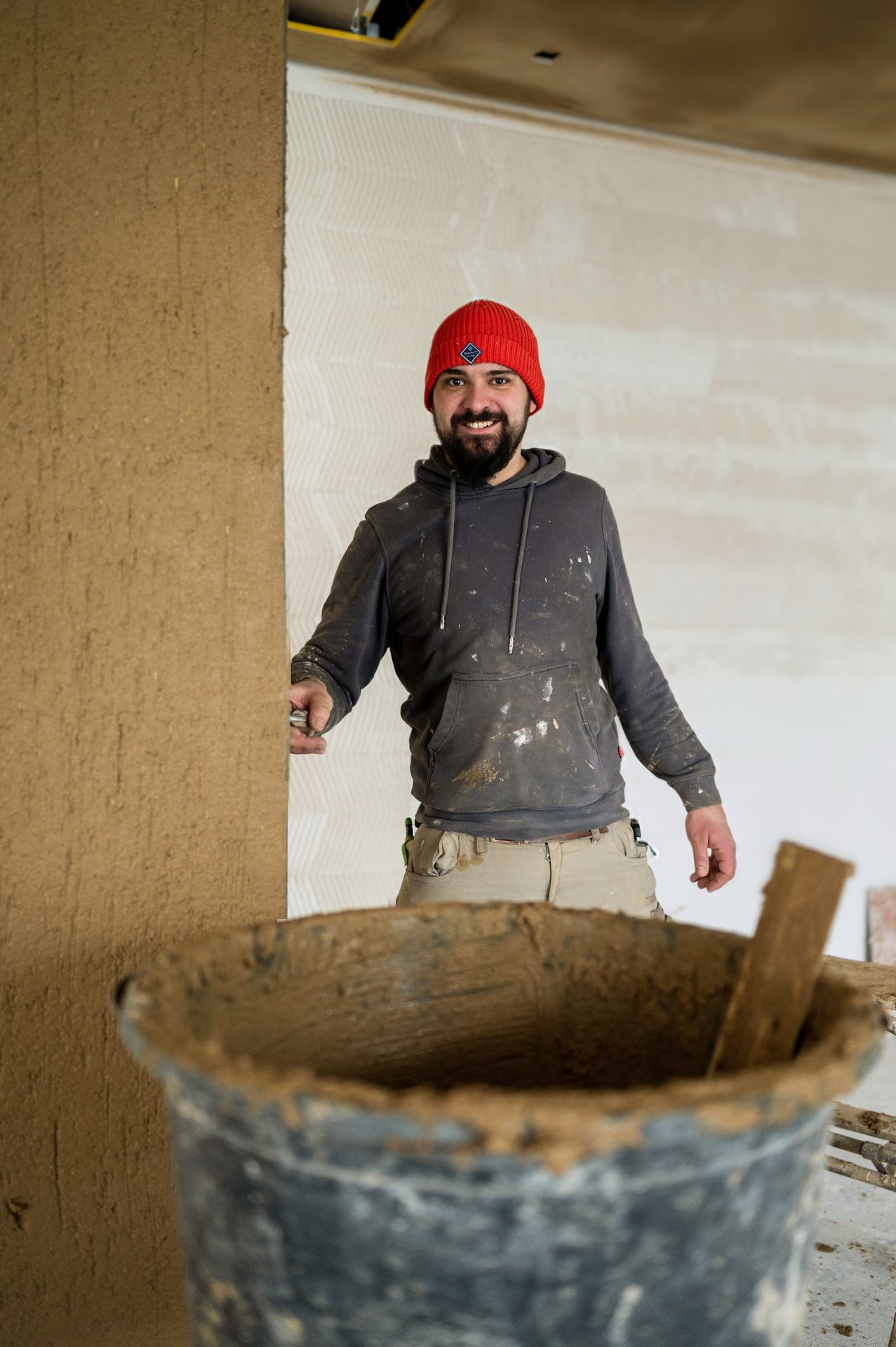
D: And why do you think you can't find any young recruits? You're a modern company, you work with modern building materials, you have cool building sites – what do you think is the reason?
H: Maybe people are afraid of joining a family business and having two bosses. The other thing is politics, which suggests that if you come home from work dirty, you're second-class.
D: What do many people in your region work in? BMW in Munich springs to mind.
H: We have the district hospital and the forensic psychiatry clinic in Wasserburg. Then we have the Inntal-Werkstätten, workshops for people with disabilities, and a lot of industry: the yoghurt manufacturer Bauer and Meggle, another company that processes conventional milk. An unskilled worker at Meggle earns far more than a skilled worker with us. The RKW Group has films and other plastic packaging produced in Wasserburg, and we also have the pharmaceutical industry here with Recipharm. So for a town of only 14,000 inhabitants, we have a lot of job opportunities on offer.
D: So that means there's strong competition from industry. What ideas and incentives could be put to policymakers to change something? What does your Chamber of Crafts say?
H: Politicians talk a lot about the shortage of skilled workers. Something urgently needs to be done, but nothing changes. Wages would of course have to go up, but then customers have to spend more money. That will always be the case. A teacher has her basic salary. She will never work out how much she costs the state per hour. And you come along as a tradesman and want 65 euros an hour. For teachers, the question doesn't even arise.
D: And what about appreciation for your work? When you've finished a job, are you proud, and do you also get recognition from the customer?
O: Yes, they're always pleased. That's just what makes it fun. You leave the site and everyone is happy. We're happy because we've done a good job, and the customers show their appreciation.
D: That's a clear advantage you have over industry, though. There, you mindlessly produce something without knowing what it is, what it's for or who it's for. As craftspeople, you get a completely different kind of appreciation.
H: Well, BMW advertises with slogans like “Sheer Driving Pleasure” or “premium vehicle”. Terms like “premium” or “deluxe” aren't protected, but the workers at BMW are genuinely satisfied and proud. At BMW they're “premium”, even if they're just a number. So through advertising and marketing, industry manages quite well to make its workers feel socially recognised.
D: OK, what other advantages does the trade have? How can young people be attracted to the trades?
H: I do think the only way is through better pay.
O: Well, appreciation as well, of course. If you treat your employees like members of the family and let them share in the company's success, that makes a huge difference.
D: And what's your everyday working life like? If I imagine working in industry, the bell rings at 9 o'clock and I have to spend 15 minutes eating in the canteen even though I'm not hungry yet. A trade business with three people working together is surely much more flexible and nicer. Can you use something like that in your recruitment? What's your day-to-day like?
H: Yes, we meet in front of our office or pick the workers up from home. Until now we've always paid for the journey and breakfast. Now we drive together and have our mid-morning snack together as a team at 9 o'clock. We get something from the butcher's, or if there's a pub or restaurant, we go there together to eat. You should support them, after all. They're suffering just as much as we are.
D: That sounds really nice.
O: You want to see something of the place where you're working, too. You don't just want to be on site; you want to get to know the town and the people. That's really nice.
D: Tell us a story about a lovely, exciting job site. Pick one!
H: We could tell you about a large building site in Switzerland.
O: We spent almost five months up at a mountain hut. Every two weeks we went home for 4 to 5 days. We weren't allowed to work at weekends in Switzerland anyway, so we went on outings then. That was fun.
D: And what work did you do there?
H: Yes, that was a concrete building. So first of all we Clay base plaster done, all with HP 14 fully skimmed. Then we Clay base plaster on all walls and ceilings and, at the end, Fine plaster applied.
D: How many square metres have you plastered?
H: Almost 2000 square metres. That was a lot of material.
O: Three lorry loads of base-coat plaster alone were delivered, and that at an altitude of 1300 metres. That was quite exciting.
D: How many people did you do that with?
O: We did most of that with just the three of us.
D: Incredible, that's a real achievement! And if you were to hire someone now, would you rather train an apprentice or take on a qualified bricklayer? What would be your ideal?
H: There are two of us who are master craftsmen, so we can train apprentice bricklayers at any time. Or we just look for bricklayers or labourers.
D: What do you expect from the person?
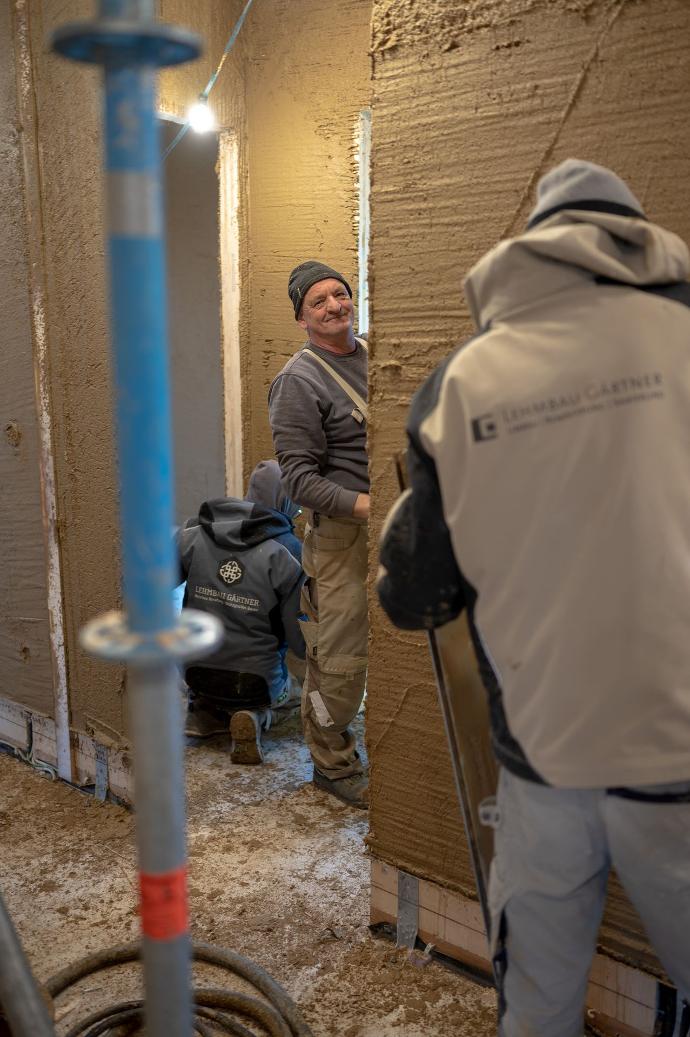
O: It just has to work on a personal level. It's meant to be a family-like environment. We're supposed to have fun together. You don't go to work to end up in a bad mood; it should be enjoyable. It simply has to fit all round, so that a team can grow out of it. You spend most of your time with each other. You see your partner less than your colleagues. So it really should work.
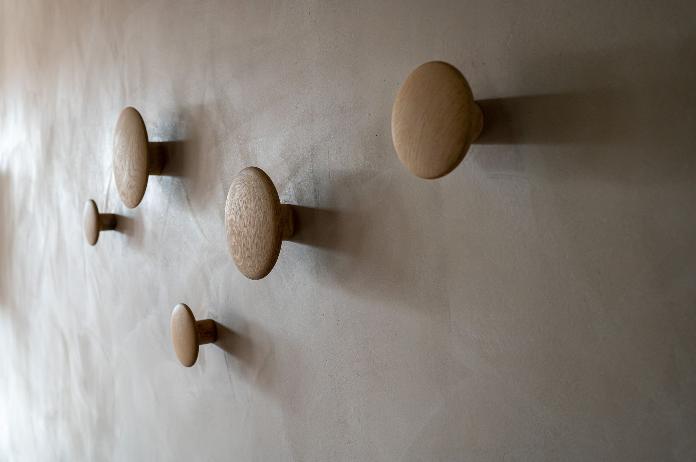
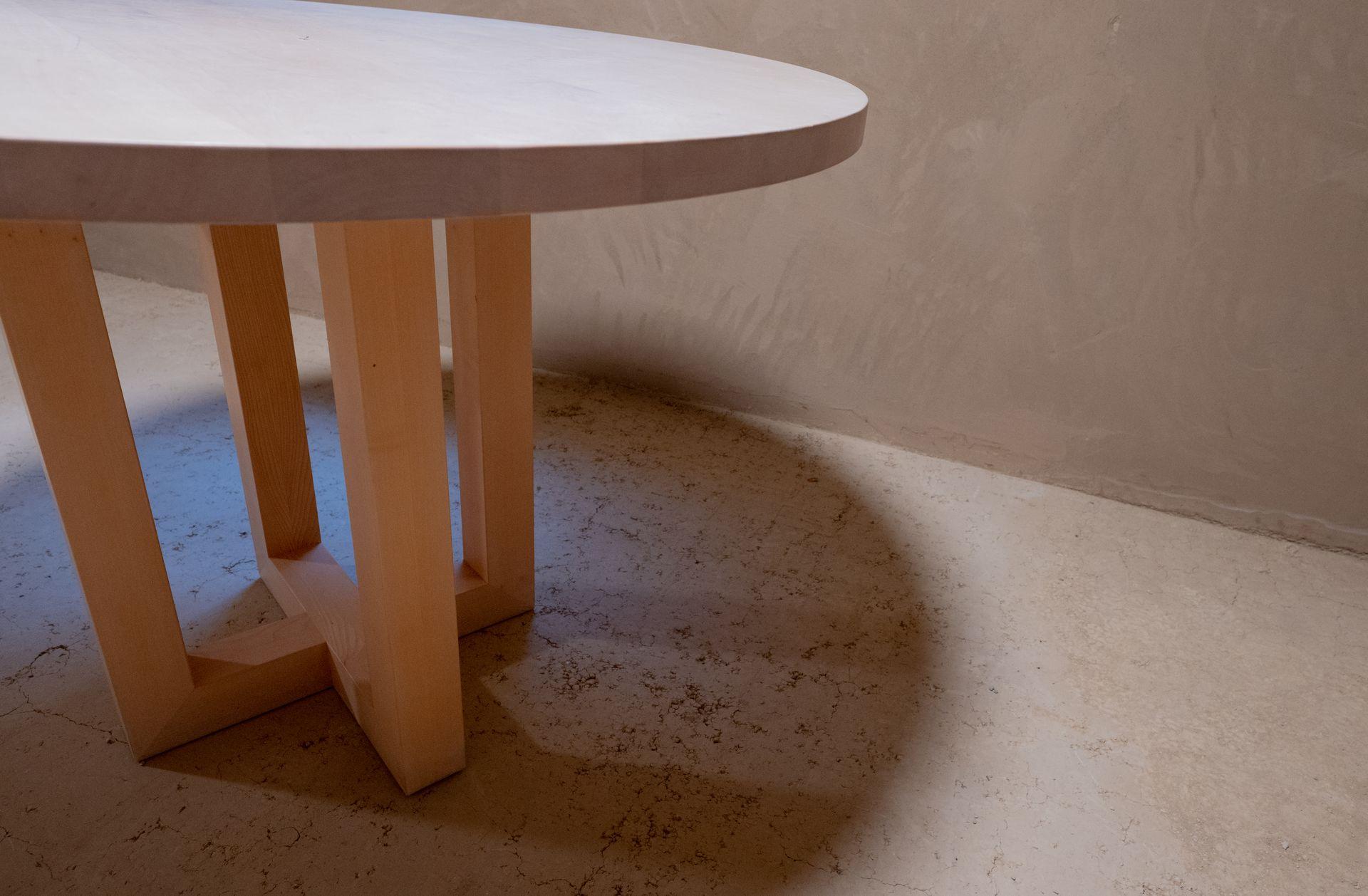
D: You're known for your perfect decorative finishing plaster. You do it really outstandingly. You're also very active on Instagram and share many of your job sites. You take good photos and are well known there. How do you rate Instagram for your company?
O: It's more of a fun factor anyway. I'd say it doesn't really achieve much.
H: It's the references that make the difference. Good work, good references.
D: Do you think your customers look at your projects on Instagram?
H: Partly. There was a village shop. They got to know us via Instagram and sent an enquiry, but unfortunately we didn't have time.
D: Can you imagine a potential employee coming across your Instagram channel and thinking: “Wow, they do great work. I want to do that too!” Would that be a channel you could use for advertising?
O: We do that too, but the people who have said yes so far have always been part-time, and we're looking for a permanent full-time employee. That would be ideal. We've now had two enquiries from small businesses that are already trading and want to get to know clay plaster and work with us for a few hours. But that's something that doesn't really help us much, because we'd be training up our own competition.
D: Hm, so your knowledge simply drains away.
H: I don't like always thinking about competition, but people who then work for half the price obviously ruin the prices. They aren't a master craftsman's business and they do it for 35 euros. We can't afford that.
D: But you really don't need to fear competition. You genuinely have a unique selling point in the quality you deliver. And what about using that quality to attract employees? Are there young people who simply share this perfectionism? Have you experienced that? Or do people not really care?
O: Well, at the moment what matters more to young people is having plenty of free time and getting off work as quickly as possible. The work itself mostly doesn't matter to them, and that really hurts when you love this work.
D: How flexible would you be if someone came along and said "Hey, I'd like to do my apprenticeship with you and work for you, but I want Friday afternoons off?”
H: We only work 4.5 days anyway. We always finish at Friday lunchtime.
O: Yes, a 4-day week is fine. We can talk about anything.
D: And how often does it happen that you're that far away? That's also difficult for potential applicants, e.g. those with a family. Five months in Switzerland, two weeks away – how often does that happen?
O: That's an exception. In terms of scale, I mean. Last year we were in Italy, but there we didn't apply base-coat plaster to the whole house; we just primed the interior of an existing building and then applied clay plaster and decorative finishing plaster on top. That came to 17 working days.
D: Well, that's doable, and then being in Italy and going out for lunch.
O: Yes, you always have to make time for that.

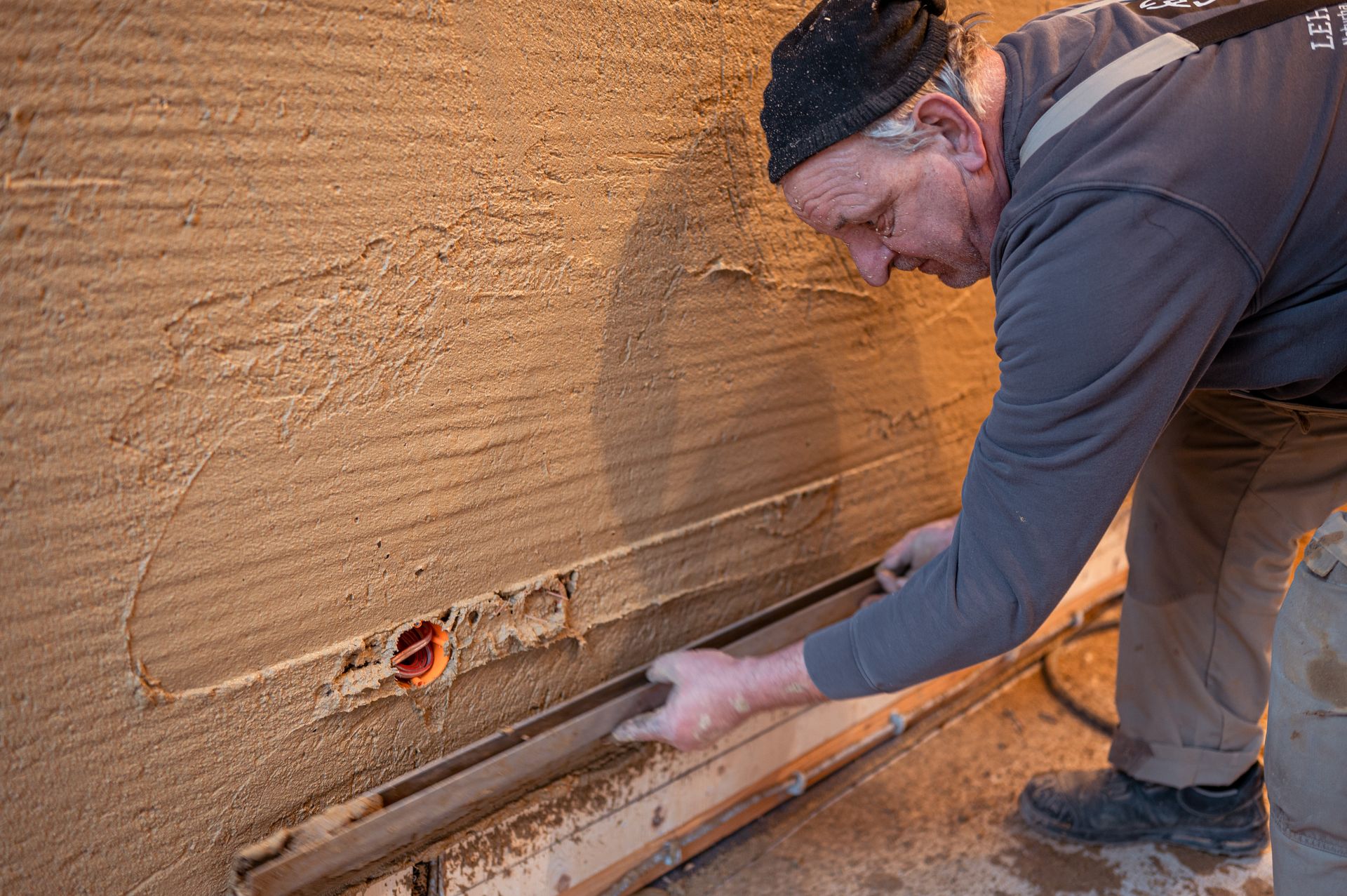
D: Would you like to rave once more about your perfect surfaces and junctions? I know that you apply a lot of designer plaster and never leave brown surfaces behind, but always coloured ones. What do you value so much about that?
H: That the customers are satisfied, and then they simply are.
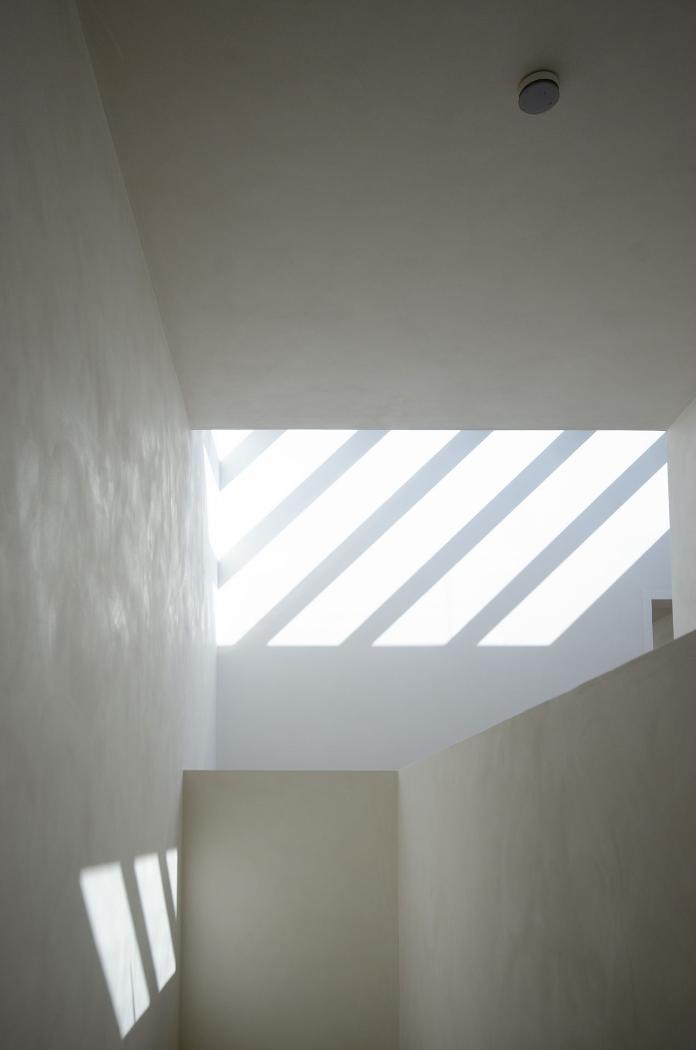
O: When you have raking light and you can't see anything, just a surface glittering in the sunlight. That's just insanely beautiful. The plaster reflects the light and the colours around it and looks different at every time of day. This play of light in clay is simply fantastic. You can't achieve that with any paint.
D: You don't have a painter you work with, because simply nothing gets painted after you've been there, right?
O: Well, if you have a coarse finishing plaster, it does get limewashed after a while. If everything is brown, it tends to be too dark.
D: Does that happen at your company?
O: We've got a site at the moment where they're leaving all the walls brown for now. It does have big windows, though.
D: Wow, that's what I always tell my customers: they can stand it for two years at most. Is there anything else you'd like to say to potential employees? Why should people work with clay?
H: Craftsmanship is a fine thing in itself. When you go home in the evening, you can simply see what you've achieved.
O: And with clay, your hands and skin always stay in good shape. It's just brilliant working with clay.
D: When I visited you back then, afterwards all I could think was: yes, this is exactly how clay construction should be done. You look after your bodies by using tools and aids, you create awesome surfaces, you're a cool team, you know how to structure your day-to-day work. I can recommend working with you to anyone!
O: Yes, thank you!