- All products
- Jute fabric, plastic-free reinforced
Jute fabric, plastic-free reinforced
Reinforcement fabric made of jute, strengthened without plastic
We have not provided a data sheet for this product
* all prices incl. VAT, excl. Shipping costs (these are displayed in the shopping basket).
To be successful, your content needs to be useful to your readers.
Conluto clay building board, 22 mm thick
Jute reinforcement mesh
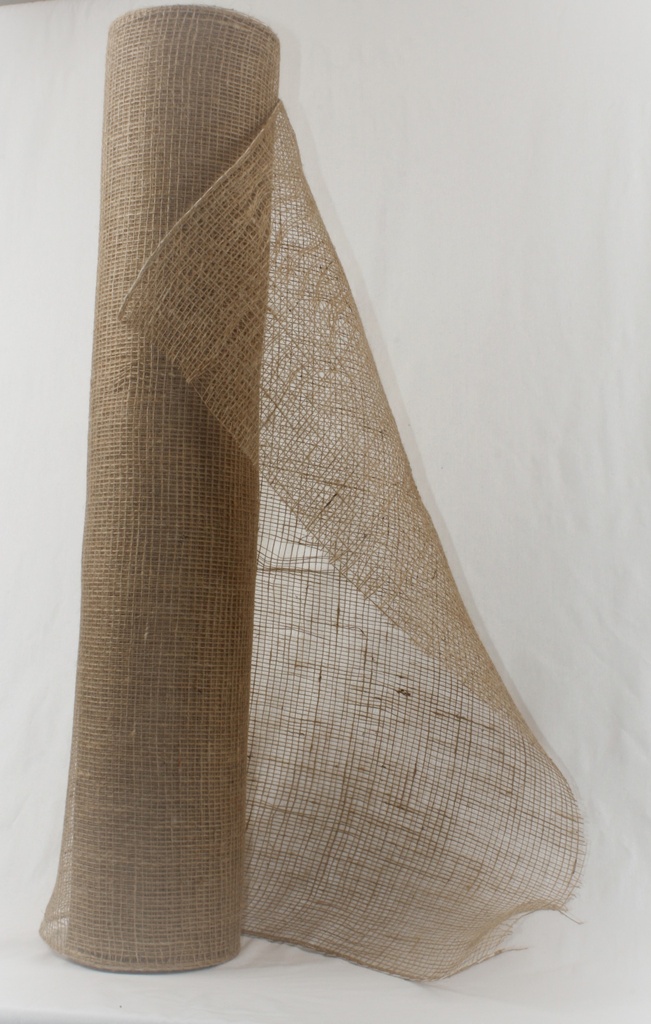
Plaster mesh made of jute, stiffened without plastic. The more affordable mesh alternative to plastic meshes.
50 m² per roll, dimensions 1×50 m, with a 7x7 mm mesh and a weight of 90 g/m². This mesh is used in plaster to bridge cracks, joints or changes of material in the substrate. It prevents cracks in the finishing plaster. Reinforcement mesh is usually embedded vertically in the still-fresh plaster using smoothing trowels. Jute mesh is more difficult to work with than plastic mesh. In its untreated state, jute absorbs moisture – in this case the moisture from the still-soft clay plaster. As a result of this moisture absorption, it becomes heavier and "pulls" on the plaster. Jute reinforcement mesh should be embedded in the plaster at the first attempt. Embedding the mesh is considerably easier with the smoothing trowel with rounded corners. Thanks to the rounded corners, there are far fewer snags in the mesh – with jute mesh, this is worth its weight in gold.
The stiffened jute fabric is stiffened with a plant-based binder. This binder is readily water-soluble. The plaster partially dissolves it, and it hardens the entire layer as it dries. This gives the surface extremely high strength.
The mesh is best cut with a pair of scissors.
Our jute fabric comes from India, and I suspect the same applies to every jute fabric you can buy on the European market, because India is one of the largest producing countries and therefore one of the largest exporters of jute fabric.
I know the mill from which we source the jute fabric. The factory is quite modern. It is a family business, now run by the third generation. The employees there are paid fairly rather than being fobbed off with low wages (as is unfortunately very often the case elsewhere). Since washing and processing jute during production generates waste water, the following point is also very important: the waste water is not simply discharged into the nearest body of water; instead, the factory has its own treatment plant where the water is treated. The standards of this treatment plant are such that our supplier has had it certified by TÜV Rheinland.
These are all social aspects that matter to me and to us when sourcing our products. There is enough suffering and misery in the world.
That leaves the question of what the jute fabric has been stiffened with.
In our experience, Indian companies can do this too, some even with a plant-based agent (no further details are available on this), but the quality varies enormously, which is why we have our jute fabric stiffened in Germany to a consistent and, above all, high quality. The finish is a trade secret there as well, but it is a plant starch.
ALTERNATIVE PRODUCTS :
Handelsmarke Adresse
Hessler Kalkwerke GmbHBaiertaler Str. 115, 69168 Wiesloch, Deutschland
+49 6222 927515
info@hessler-kalkwerk.de