Hello Maik, hello Eike, thank you very much for taking the time to talk to us.
Maik: You're welcome!
Eike: Thanks for having me!
Could you briefly introduce yourselves? Who or what is framtid, and what are your goals?
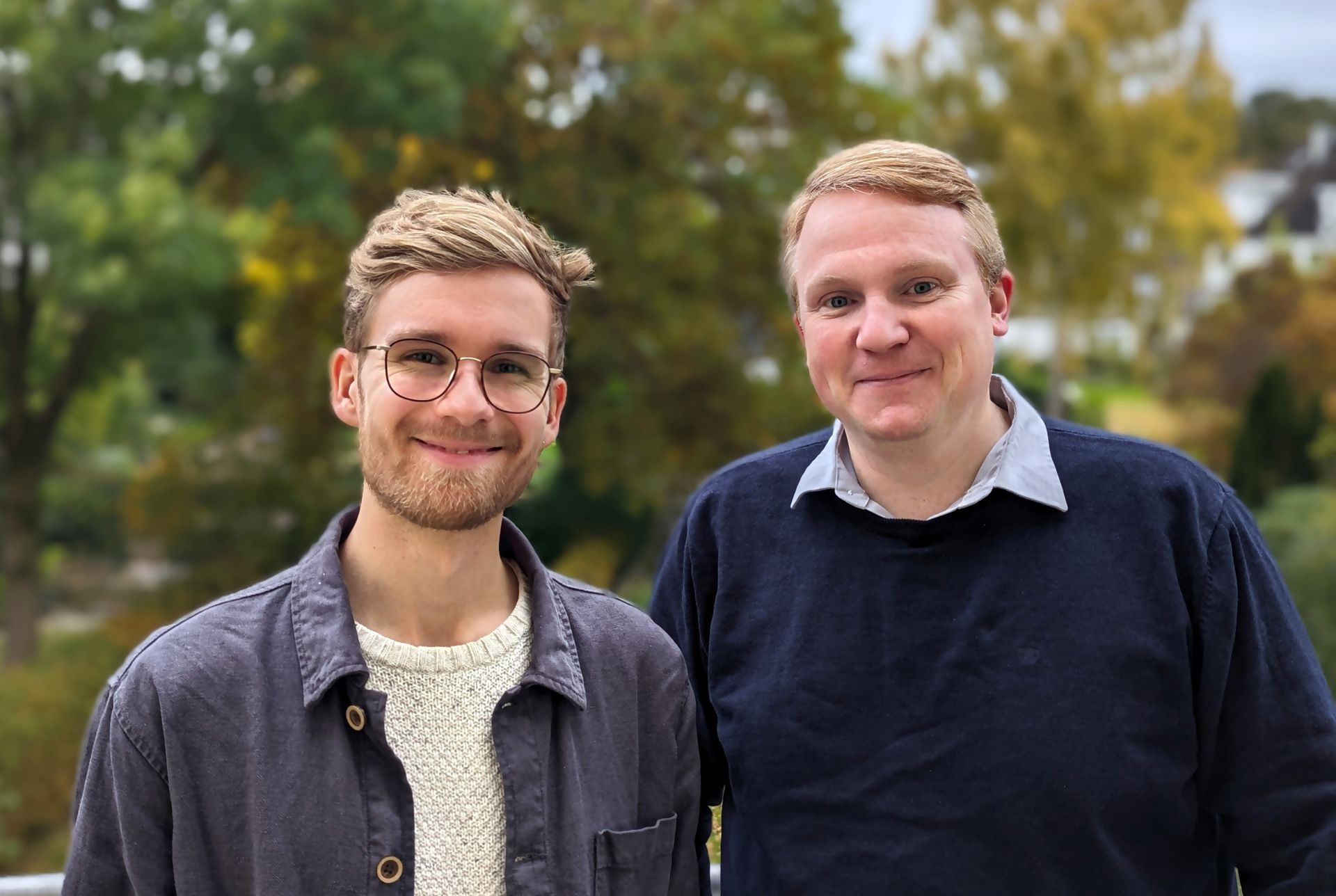
Eike: We are traditional financial and insurance brokers with offices in Berlin-Kreuzberg and Hamburg-Winterhude. framtid comes from the Scandinavian languages and means "future". We decided to change the insurance industry and give it a long-term orientation.
Maik: Our main focus is on ESG criteria. We want to make people aware that investments and insurance policies have an impact. While many people are already thinking about which bank they are with, awareness of insurance is still in its infancy. We are among the pioneers who have been driving this issue forward for a long time.
How long has framtid been around?
Eike: Actually, since the 1980s. With a restructuring of the company in 2015, we decided to pursue the path we had taken even more consistently and, for example, to offer only investments that meet our investment criteria.
Can you explain to us how conventional insurers use the money that customers pay for health, liability or home contents insurance?
Eike: Imagine insurance companies as large pots into which all insurance premiums flow. This is referred to as the guarantee assets. In property and casualty insurance such as liability and home contents insurance, but also in health insurance, the pay-as-you-go principle applies: some people pay money in, while others need it for benefits, be it in hospital, after an accident or in the event of theft. The money doesn’t stay in the pot for long. With life insurance and retirement provision products, on the other hand, money is invested over longer periods. Insurance companies make various investments. These include share portfolios and other investments with high return potential, which, however, often come from problematic sectors. There is room for improvement here.
How do you define insurance based on environmental and social criteria? What criteria do you use to select your products and service providers to ensure that they are socially responsible?
Eike: We assess insurance policies according to environmental, economic and social criteria and distinguish between offers that meet these criteria to varying degrees. We analyse how companies implement environmental and social standards, how they invest capital and whether, for example, they have exclusion criteria for problematic sectors such as coal, nuclear power or arms. We also check the financial strength of the insurer so that larger claims can be covered as well. And then, of course, there is the idea of the community of mutual support. Some insurers, for example, have organised themselves along quasi-cooperative lines as mutual insurance associations in order to move away from the pure profit orientation that takes centre stage at public limited companies.
Can your customers easily understand this information? What role does transparency play in your work? Can customers come to you, as they can with GLS Bank, and say they would like their money to be invested in organic farming, for example, and you have the right insurance for them?
Eike: Unfortunately, we can’t go so far that we or the customers can determine which sector the money flows into via the insurance. However, by selecting the insurer and the available fund universe, we can get close to it.
Maik: We try to make everything as transparent as possible in our consultations. Here, however, the information provided by the insurance companies sets limits for us. In dialogue with the insurance companies, on the other hand, we can communicate our ideas of investing according to ESG criteria. However, there is still no clear definition of what this actually means. Nor is there a crystal-clear framework for ESG-based investments. It is a positive development that, since last year, EU regulations have taken the first steps in this direction, but it will be some time before we can measure the progress. The insurance industry has started to move, though, because everyone now has to deal with the issue. We will then look at the consequences in each individual case and follow over time what is actually implemented.
How do EU regulations affect insurance based on environmental and social criteria? What challenges are there in promoting insurance based on environmental and social criteria in an industry that has traditionally focused on financial aspects?
Maik: The EU Taxonomy Regulation mainly aims to classify capital investments and to draw clear distinctions between conventional insurance products and those based on ESG criteria. For us and many clients, for instance, it is incomprehensible why gas and nuclear power were classified as taxonomy-compliant. In consultations, for example, we have to actively raise the topic of ESG criteria with clients, especially for investment products (e.g. private pension insurance and investments). The challenge here is to find a personal definition of responsible investment, because everyone understands something different by the term.
How do you respond to the misconception that insurance based on environmental and social criteria might be more expensive or offer less comprehensive cover than conventional insurance?
Eike: This is a positive challenge for us, as brokers, we stand between the customers and the insurance companies. The demand for such insurance policies is there. Some insurance companies are working on aligning their investments more closely with environmental and social criteria. So we are well placed to bring both sides together. Long-term studies have shown that investments based on ESG criteria perform no worse than conventional investments on balance, and in some cases even better. The fact that some insurers still charge surcharges for these tariffs has to change, especially in order to reach the younger generation.
You got to know David and the Lehm-Laden through the Economy for the Common Good (ECG) movement. Like us, you are a company that draws up an ECG balance sheet. What prompted you to take this step? What has changed since then?
Maik: The impetus came from our wish to take a self-critical look at what we do. We realised long ago that we differ from other players on the market and approach many things differently – not only when it comes to circularity and building biology. In our industry, for example, many employees are not
permanently employed, but work as self-employed sales agents. Their income depends on how many and which insurance products they sell. This can lead to them pushing products that are not necessarily in the best interests of their customers, but rather serve to secure their own income.
Does that mean insurance agents only receive commission?
Maik: Yes and no. We also receive commissions, which make up part of our income. The decisive difference, however, is that all our employees are on a fixed salary and have regular employment contracts subject to social security contributions. As a result, nobody in our company should feel under pressure to advise clients for their own benefit; instead, the focus should be on the long-term client relationship.
So that means you can live on the fixed salary alone?
Maik: Yes, that is an important point. Our employees are permanently employed and paid a salary regardless of their position in the company. It makes no difference whether someone works in advisory or in the office. Every person contributes to the company's success, and this is also rewarded separately for everyone together when the company is successful. In this respect, we differ from many other companies in which individual employees are only responsible for their own success. With us, it is therefore always a team effort to which everyone contributes their part. This also makes for much more team-oriented collaboration.
You have repeatedly mentioned retirement provision in your previous answers. Can you give a concrete example of an insurance product for retirement provision that you would recommend?
Maik: We have developed our own pension concept, which grew out of critical questions from customers and was launched back in 1996. Instead of founding our own insurance company, we decided to work with the existing structures. This means that we use the insurers' existing insurance products and influence the way the money is invested. With the transparente concept, we can ensure that investments in arms, nuclear energy, fossil fuels and child labour are excluded, while positive criteria such as investment in renewable energy are met. This approach is comparable to the electricity market. When the use of renewable energy and the anti-nuclear movement gained momentum, many people expressed a desire for more renewable energy. Yet nobody suggested building their own power grid. The existing grid works, but it can be expanded. The point is rather what kind of energy we allow to be fed into this grid – in other words, which investments the insurance companies make. So our transparente concept should be understood as an open invitation to insurance companies to exchange ideas with us and implement the concept together.
I'd like to move on to the area where our work overlaps. Do you have any advice on buildings insurance that takes environmental criteria into account? Are there perhaps already products that specialise in houses built with natural building materials?
Eike: So far, insurance policies specifically for residential buildings made from natural building materials are still rare. This is because insurers generally take various risks into account in a mixed calculation. For example, an old country house with a timber-frame construction and a thatched roof represents a higher risk for the insurer than a new concrete building with a tiled roof. The same applies to a house on the coast compared with a town house inland. Nevertheless, there are regional insurance companies that are pioneers in this area and offer their customers additional benefits after a claim, such as for renovations using natural building materials, energy-efficiency consultations and CO2 offsetting after fire damage. Because of this diversity and the individual circumstances involved, comprehensive advice is important.
You pointed out the far-reaching impact of climate change on the insurance industry. Shouldn't insurance companies be rethinking their approach out of self-interest alone?
Maik: That is already happening. The experience in the Ahr valley has shown that the industry and awareness of this issue have started to shift. Increasingly frequent storm disasters and extreme weather events on this scale are simply not viable for the industry in the long run. A single insurer cannot cope with such risks alone and depends on reinsurers. If, for example, 10% of the buildings insured by a regional insurer are destroyed by flooding or fire, it cannot shoulder the financial burden on its own. The reinsurers are therefore also looking ever more closely at which risks are underwritten and at what price. That is why reinsurers are investing more heavily in climate research and looking for ways to face these challenges.
Eike: A change in thinking is taking place. After all, the major societal challenges such as demographic change, climate change and digitalisation also affect the insurance industry. These companies have to reorient themselves and adapt. Overall, we see many advantages in this. It is important that young people think about their retirement provision. The state pension alone no longer offers sufficient cover these days. Anyone who doesn’t take care of it in good time runs the risk of being poor in old age. Insurers therefore need to offer suitable products to reach the younger generation. I am optimistic and believe that here, too, the loud voice of the climate movement can no longer be ignored.
But does this generation even think about its pension? I know lots of 20- to 30-year-olds from the FFF movement who say: why should I do anything for my pension? If something doesn't change soon, the Earth won't even exist in 30 years…
Eike: Yes, there are also more and more young people who no longer want to have children in view of dystopian future scenarios. I can understand that to some extent, but ultimately I don’t share the conclusion. As a society, we always have the chance to tackle problems actively and positively, which has already worked in the past, e.g. the anti-nuclear movement. Of course, a great deal is coming together right now: the climate crisis, Covid fatigue, war, inflation – that is obviously tough. We have reached several tipping points, and with “business as usual”, investments on the financial markets are dramatically missing the Paris climate targets. Things look anything but rosy. But young people are also going into politics and will finally address these issues and create frameworks. I believe in the good in people, even though there are, of course, larger structures that need to be tackled.
Maik: I agree. Despite the current challenges and climate issues, we should stay positive. Young people in politics will drive these issues forward and improve the legal framework. We can all make the right decisions individually and also put pressure on politicians to bring about change. We will need both.
What do you think the future holds for insurance based on environmental and social criteria? What developments or innovations do you expect? What would you like to see?
Maik: Our hope is that investments based on ESG criteria will become so dominant and so much a matter of course in the insurance sector that conventional investments gradually disappear. Just as new coal-fired power stations can no longer be built economically in Germany, conventional investments should simply no longer be attractive. However, insurance companies have long investment horizons, and decisions have an effect for decades. Whether this hope is realised depends on critical consumers on the one hand, and on economic incentives and the legal framework on the other. Like companies in other sectors, insurers will have to improve their environmental performance in order to survive in the market. The timeframe for this change depends on the line of business. In life insurance, investment horizons are long, which is why bad decisions have long-lasting effects. Pressure could also arise from uninsurable regions and grassroots movements. Politicians will then not be able to ignore this potential economic consequence for insurance companies either. Nobody can approve of entire regions becoming uninsurable. Ultimately, a combination of regulation and civic engagement will be needed to shape the future of the insurance industry.